Quick Answer
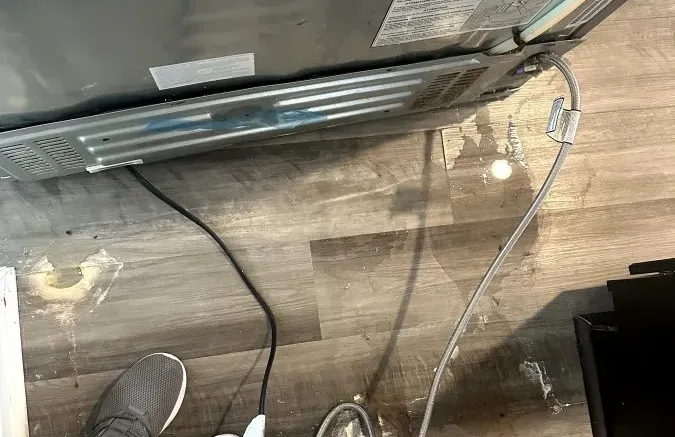
Water pooling in front of a dishwasher most often points to a door obstruction, debris on the door gasket, excess suds, or a blocked spray arm. Water appearing under the cabinet may come from a drain connection, supply line, water inlet valve, or a part beneath the machine.
Stop using the dishwasher and dry the floor. If water is actively spreading, close the dishwasher's water supply valve under the sink, provided you can reach it without stepping in water or touching wet electrical equipment. Note where the water first appears, not just where the puddle ends.
Most Likely Causes
Water escaping around the door
A dish or utensil can keep the door from closing fully. Debris on the door gasket, the rubber seal around the opening, can also let water through. A front-corner leak during washing fits this pattern. Clearing an obstruction and wiping the gasket are DIY-safe. A torn gasket or door that will not latch normally needs service.
Excess suds or spray directed at the door
Hand dish soap, too much detergent, or spilled rinse aid can produce foam that escapes around the door. A blocked spray arm can also send water toward it. If water seems to come from the top rack area, check that the rack is seated and the upper spray arm clears the dishes. Those checks are DIY-safe. A damaged spray arm or upper-rack water connection needs a technician.
A drain problem or under-sink connection
Water appearing near the end of a cycle may come from the drain hose connection, air gap, or sink plumbing. The drain hose carries used water out of the dishwasher. You can inspect visible connections for drips and clean the dishwasher filter. If water remains in the tub, see our guide to a dishwasher not draining. A leaking connection needs repair by a technician or plumber.
A leaking supply line or water inlet valve
The water inlet valve admits water during filling and should close when filling stops. Water under the machine during a fill may come from the supply line or valve. Water continuing to enter the tub while the dishwasher is off particularly points to a valve that is not closing. Close the accessible supply valve and arrange service. Cutting power alone will not stop a valve stuck open.
Overfilling or a stuck float
On models with a tub float, it rises with the water level to help prevent overfilling. Debris can hold it down, while a faulty float switch or another fill-control fault can let the tub overfill. Water unusually high in the tub or spilling out during filling fits this pattern. Checking an accessible float for debris is DIY-safe. Switch and fill-control diagnosis is technician work.
A leak beneath the dishwasher
The drain pump pushes water out during draining. Its seals or internal hoses can leak beneath the cabinet, even when the door and under-sink connections are dry. Finding the source requires moving or opening the machine.
Safe Checks to Do First
- Stop the cycle and dry the visible floor. Note whether moisture starts at a front corner, under the cabinet, or inside the sink cabinet. Never run another cycle to investigate an active leak.
- With the dishwasher off, push both racks fully in. Move anything touching the door or blocking a spray arm. Gently turn the accessible spray arms by hand to check clearance.
- Wipe the accessible door gasket and door edge. Look for a torn, flattened, or displaced section without pulling the gasket out.
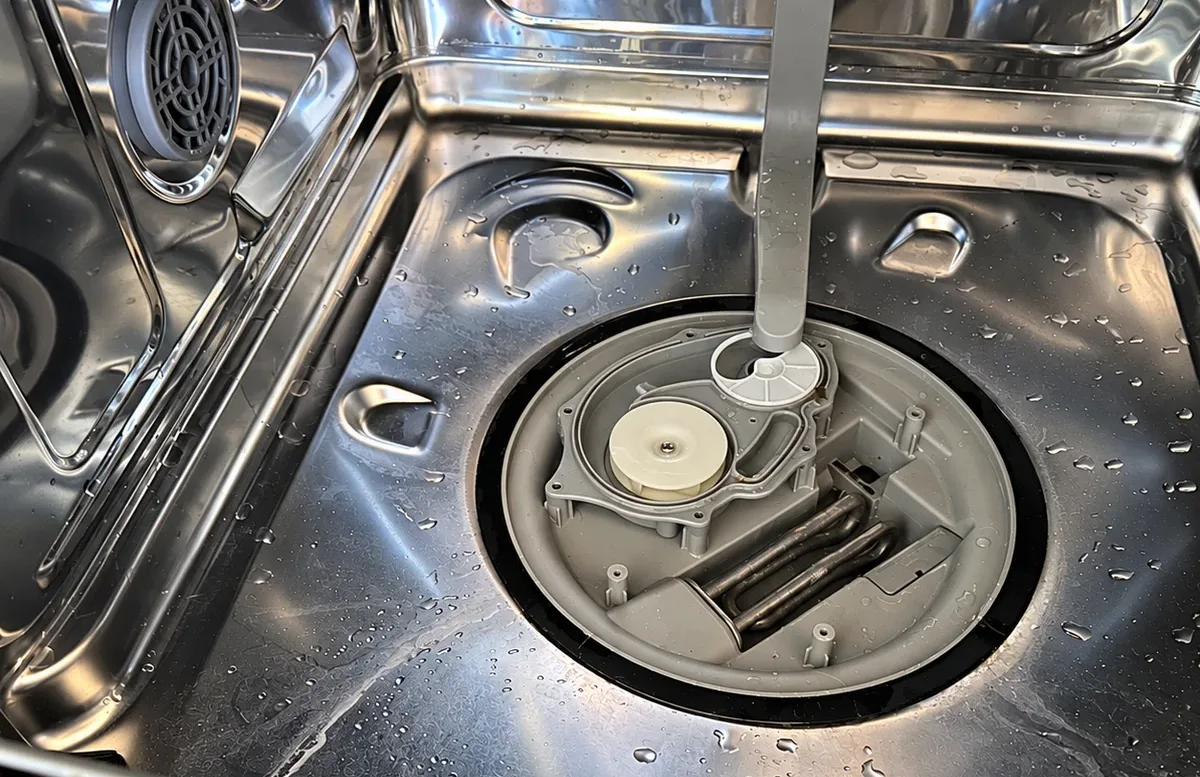
- Remove and rinse the dishwasher filter and accessible sump screen under the lower rack, following the owner's manual. Refit them securely. If substantial standing water obscures the bottom of the tub, stop.
- If your model has an accessible float in the tub, clear debris around it. Check that it moves freely only as directed in the owner's manual. Do not force or remove it.
- Look under the sink for drips at visible drain and supply connections. If there is an air gap, clean its removable cap as directed in the manual. If leaking began after a new garbage disposal was installed, have the installer confirm that its dishwasher inlet knockout plug was removed. Leave hoses connected.
If you corrected an obvious loading or detergent problem, watch the next normal cycle closely and stop it at the first sign of water. A suspected hidden leak is not a reason to run a test cycle.
What the Symptoms Usually Mean
Water leaks from a front corner during washing
This most often points to an obstructed door, dirty gasket, excess suds, or a spray arm hitting dishes. If those checks find nothing, the door seal, latch, or spray system needs inspection.
Water seems to leak from the top rack
A blocked upper spray arm or an upper-rack water connection is the usual suspect. If the rack and dishes are positioned correctly, stop using the machine until the spray system is checked.
Water appears under the cabinet during filling
A supply line or water inlet valve leak is more likely than a door-seal problem. The source may not be visible without moving the dishwasher.
Water appears during draining or backs up at the sink
This most often points to an under-sink drain connection or a blocked drain path. If the sink backs up too, household plumbing may be the source.
The tub gets unusually full or spills during filling
Overfilling points to a float that cannot move freely, a float switch fault, or another fill-control problem. If the float area is clear, stop using the dishwasher.
Water enters the tub while the dishwasher is off
A water inlet valve that is not closing is the leading concern. The tub can overflow even without a running cycle.
When to Stop DIY and Call a Technician
Stop if water returns after the safe checks, comes from beneath the cabinet, or appears near electrical equipment. A damaged gasket, door that will not latch, unusually high water level, or water entering the tub while the machine is off also needs service. Error codes vary by brand and model and do not necessarily identify the leaking part.
Leave panels in place and do not pull out a built-in dishwasher. Hidden plumbing, pump, valve, electrical, and disassembly work belongs to a technician. Arrange dishwasher repair service before using the machine again.
From Our Repair Log
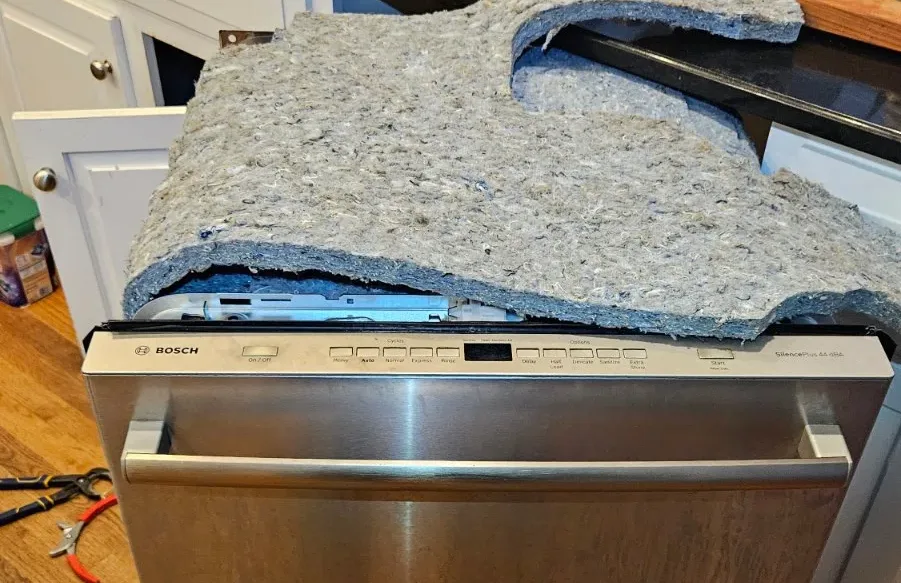
November 2026: Bosch Dishwasher Leaking Water. Water Valve Replacement in Raleigh
We tested the voltage at the valve while it was operating and again when it was supposed to close. Power was being cut off, but the valve sometimes remained open.