Quick Answer
When dishes come out dirty, start with the filter, spray arms, and loading. Food trapped in the filter can leave grit behind. A blocked spray arm or tightly packed rack keeps wash water from reaching the dishes.
Fresh detergent and hot water matter, too. If dishes stay dirty across both racks after those checks, the dishwasher may not be filling properly or circulating water well. Diagnosing those faults is technician work.
Most Likely Causes
Clogged filter or sump screen
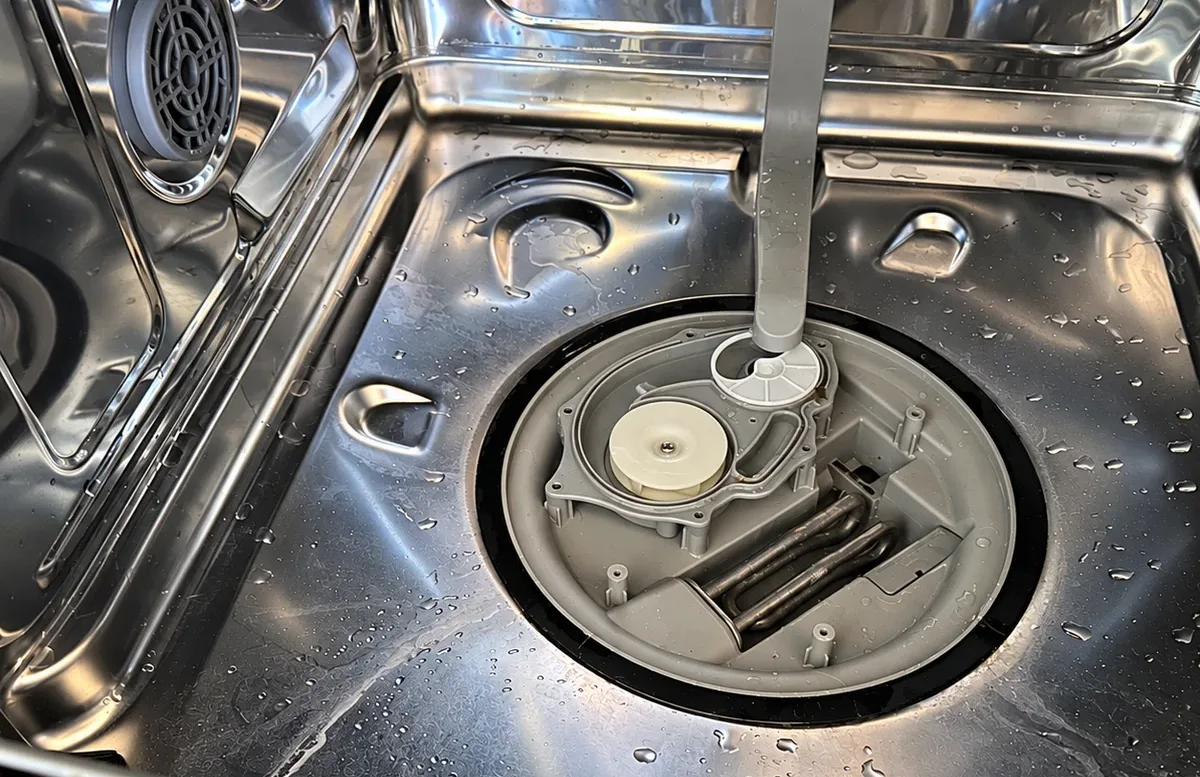
Food collects in the filter and on the visible sump screen beneath the lower rack. Grit on dishes or debris left in the tub often points here. Both are homeowner-cleanable according to the owner's manual.
Blocked spray arms or crowded racks
Spray arms send wash water over the dishes. A tall pan can stop an arm, while nested bowls and spoons shield each other from the spray. With the dishwasher off, you can check arm movement and rearrange the load.
Detergent that does not release or dissolve
A dish can block the dispenser door, and damp or old detergent may not work well. A pod left behind after a completed cycle can also mean weak spraying or water that is too cool. Try fresh dishwasher detergent and leave the dispenser clear.
Water that is too cool
Cool water is less effective on grease and may leave detergent behind. If hot water takes a while to reach the kitchen sink, run the faucet until it is hot before starting a cycle. Persistent greasy residue can point to a dishwasher heating fault.
Low fill or weak wash circulation
The water inlet valve admits water. The wash pump pushes it through the spray arms. Washing that sounds unusually quiet, or poor cleaning on both racks, can point to low fill or weak circulation. A technician can distinguish between them without guessing at parts.
Safe Checks to Do First
- Scrape off large food pieces. Space dishes apart, keep utensils from nesting, and leave room for the spray arms and detergent door.
- With the dishwasher off, remove and rinse the filter as your owner's manual directs. Clean the visible sump screen. Watch for broken glass and do not reach into an opening you cannot see.
- Turn the spray arms gently by hand. Clear anything in their path. If your manual shows how to remove an arm without tools, rinse its openings and reinstall it without forcing it.
- Use fresh dishwasher detergent. Run the nearby hot-water faucet until hot, then try a normal wash cycle rather than a quick rinse cycle.
- Check that the dishwasher shutoff valve under the sink is open, if you can identify it. Do not force a stuck valve or disturb the water line.
What the Symptoms Usually Mean
Food particles or grit remain on dishes
This most often points to a dirty filter or sump screen. Water left standing in the tub after the cycle points instead toward a drainage problem. See the dishwasher not draining guide.
Only the upper rack stays dirty
A blocked upper spray arm or items shielding the rack are the first suspects. If the arm is clear and the rack is fully pushed in, poor water flow to that arm becomes more likely.
Greasy dishes or detergent remains
Cool water and a blocked dispenser are common causes. Detergent left in an open dispenser, especially with dirty dishes on both racks, points more toward weak spraying.
Dishwasher stops early instead of finishing
An interrupted cycle usually points to a cycle fault rather than a loading problem. Water intake is one possible cause. Note when it stops and record any displayed code, since code meanings vary by brand and model.
When to Stop DIY and Call a Technician
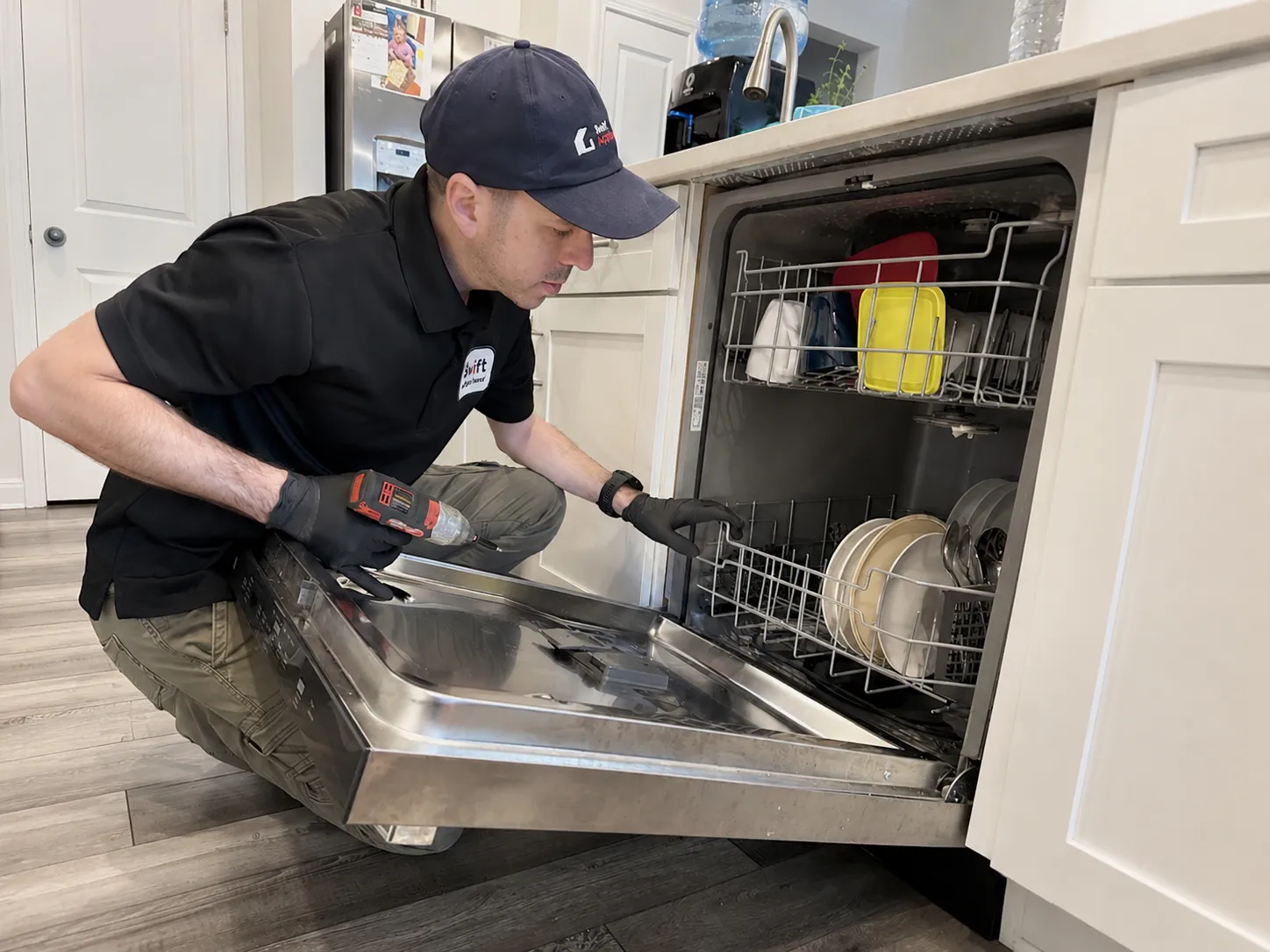
Stop if the dishwasher leaks, trips a breaker, smells hot, repeatedly stops early, or still leaves dishes dirty after the safe checks. Do not remove panels or test electrical parts. A technician can check fill, wash circulation, and heating during a cycle. Schedule dishwasher repair service if the problem persists.
From Our Repair Log
October 2026: Bosch Dishwasher Stops After 2 Minutes. Flow Meter Sensor Replacement in Raleigh
We replaced the sensor noted in the repair record. Replacing it addresses the water-flow feedback behind the cycle interruption rather than just clearing the timer display.