Quick Answer
Stop the washer and turn off its water supply if the leak is spreading. Common sources are supply hose connections, the drain hose, and, on front-loaders, the door gasket or detergent dispenser.
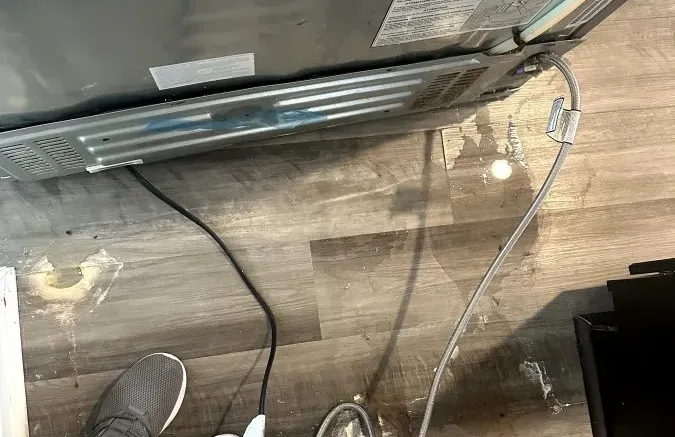
Notice when the water appears: while the washer is off, filling, washing, or draining. A puddle at the bottom does not pinpoint the source. Water can run along the cabinet or across the floor before you see it.
Most Likely Causes
Supply hose or faucet connection
The hot and cold supply hoses bring water to the washer. A connection may drip even when the machine is off. Look for moisture at visible fittings. A damaged hose needs replacement, not tape.
Drain hose or standpipe problem
The drain hose carries water to the standpipe or laundry sink. Water that appears mainly during draining often points to a loose hose end or an overflowing standpipe. Check what you can see without moving the washer. A backed-up household drain calls for a plumber.
Front-load door gasket
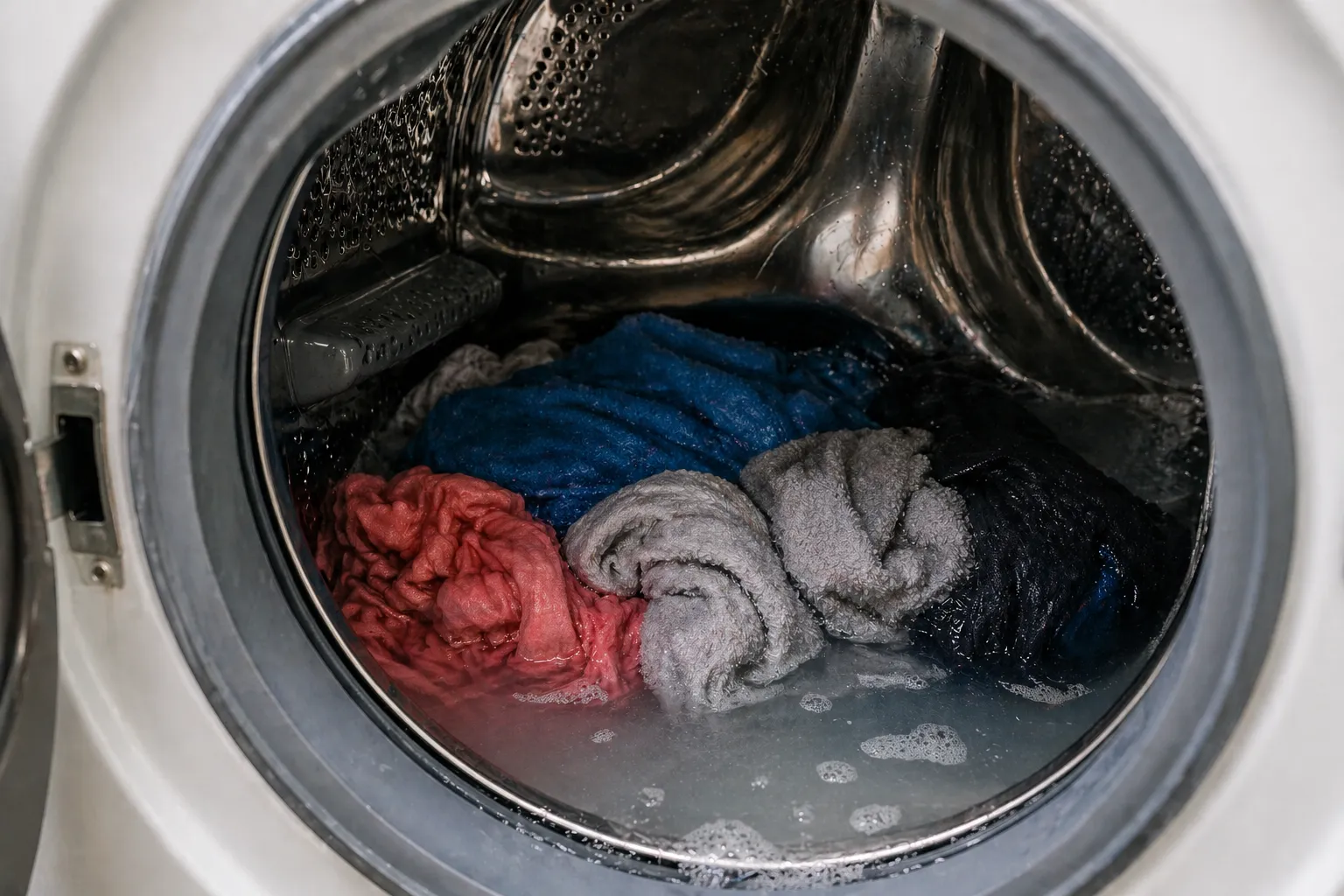
The rubber gasket seals the door opening. Trapped clothing, residue, or a tear can cause a leak during washing, especially with a full load. Wipe the accessible gasket and check for damage. Replacing a torn gasket is technician work.
Detergent dispenser or excess suds
Water at the dispenser during filling can come from buildup or a drawer that is not seated properly. Too much detergent can also send suds out of the dispenser or door. Cleaning the drawer as your manual directs and using the specified detergent amount are safe first steps.
Drain pump filter or internal drain leak
On front-loaders with a small filter door, a loose drain pump filter can leak near the lower front. The drain pump moves water out of the tub through internal hoses. You can check a user-accessible filter, but a leak from inside the cabinet needs diagnosis.
Tub seal or bearing
Less often, a worn tub seal lets water escape beneath the tub. On some washers, water can also damage the bearing, which supports the spinning tub. A leak from underneath paired with a loud rumble during spin points toward this repair, not a hose to tighten.
Safe Checks to Do First
- Pause the cycle and turn off both supply valves if water is spreading. Unplug the washer only if the plug and the area around it are dry.
- Dry the floor and note where fresh water first appears and what part of the cycle is running. Do not run another cycle if water is pooling rapidly.
- Look for drips at visible supply connections. Check that the drain hose end stays in the standpipe or sink and that the drain does not overflow.
- On a front-loader, clear clothing from the door gasket, wipe its accessible folds, and look for tears. Clean and reseat the detergent drawer as directed in your manual.
- If your manual identifies a user-accessible drain pump filter behind a small front door, drain water through its little hose first or use a shallow container and towels. Expect a few cups of water. Remove coins, hair ties, or small socks from the filter, then reinstall it securely.
Stop before moving a washer you cannot handle safely or removing a cabinet panel.
What the Symptoms Usually Mean
Leaks while the washer is off or filling
A drip while the machine is off most often starts at a supply connection. During filling, water near the front of a front-loader points more often to the dispenser. Water that keeps entering the tub after the cycle stops may mean the water inlet valve, which controls incoming water, is not closing.
Leaks at the front during washing
On a front-loader, this most often points to clothing caught in the door gasket or a damaged gasket. A lot of visible suds makes detergent amount another likely cause.
Leaks at the bottom during draining
The drain hose, standpipe, and user-accessible drain pump filter are the first places to check. Water left in the tub is a separate clue covered in our washer not draining guide.
Leaks underneath during spin
Water appearing beneath the tub with a rumbling spin can point to a worn tub seal or bearing. The puddle alone cannot confirm it, so leave the internal diagnosis to a technician.
When to Stop DIY and Call a Technician
Keep the washer off if water reaches an outlet, the leak is heavy, or water comes from inside the cabinet. Shut off the supply valves if leaking continues while the washer is idle. Do not touch a wet plug or outlet.
Arrange washer repair service for a torn gasket, an internal leak, water entering an idle tub, or a leak that returns after the accessible parts are clean and secure. Removing panels and testing electrical parts are technician work.
From Our Repair Log
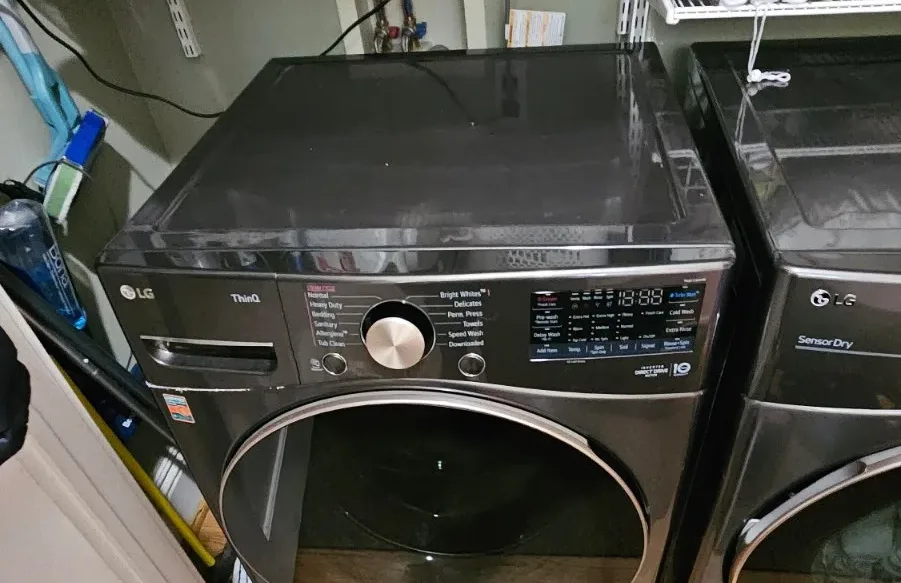
October 2026: LG Washer Leaking Water. Diagnosis in Raleigh
We ran a Speed Wash cycle and then tested the washer with a load, with no leaks during either initial test. After opening the unit, we found rust beneath the dispenser, but no cracks in it.