Quick Answer
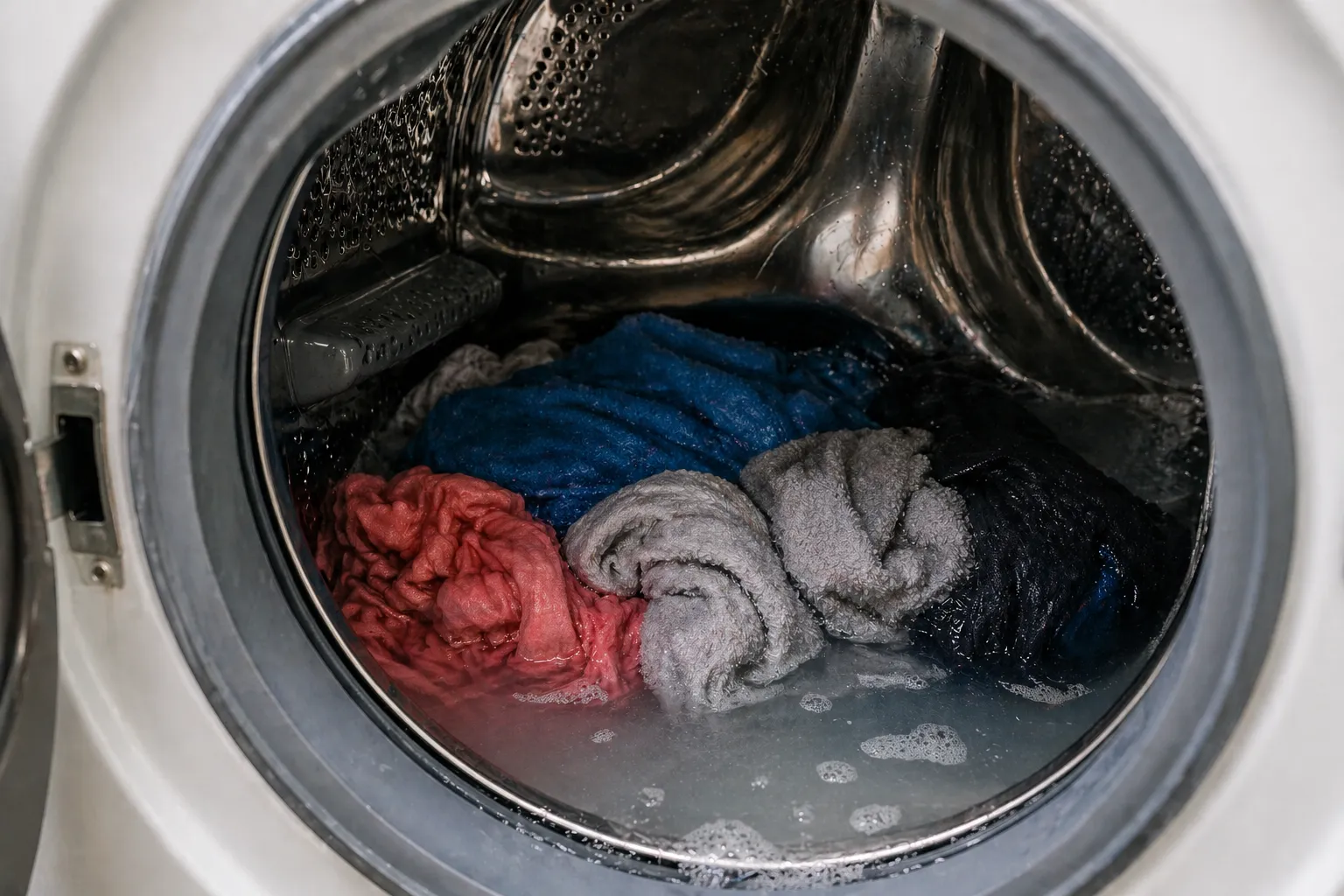
If your washing machine is not draining, start by checking the drain pump filter, especially on a front-load washer. Coins, lint, and small clothing items can block the filter and prevent water from leaving the tub. Other common causes include a clogged drain hose, a failed drain pump, or a household plumbing blockage.
Check the visible drain hose and, if your model has a user-accessible pump filter, follow the manufacturer's instructions to drain and clean it safely. Then try Drain & Spin once. If water still remains in the washer, further diagnosis may be needed.
Most Likely Causes
Clogged drain pump filter
A clogged drain pump filter is one of the first things to check when a front-load washing machine won't drain. Small items such as coins, hairpins, buttons, and lint can collect in the filter and restrict water flow.
The washer may drain slowly, leave water in the drum, or display a drain error code. In many cases, cleaning the filter restores normal drainage without replacing any parts.
Important: Not every washing machine has a user-accessible drain filter. Many top-load models do not. Check your owner's manual before attempting to locate or remove one.
Blockage in the drain pump or internal hose
Even with a clean filter, a sock, fabric, or another small object can become trapped in the drain pump or internal hose. The pump may hum while little or no water leaves the machine.
Unlike cleaning a user-accessible filter, finding an internal blockage often requires opening the washer and should be handled by a qualified technician.
Failed drain pump
The drain pump moves water from the washer into the drain hose. If the pump motor fails or its internal components become damaged, water may remain in the tub.
A failed pump may be silent, make a humming sound, or run without moving enough water. However, these symptoms can also indicate a blockage. The pump should be tested before it is replaced.
Kinked drain hose or clogged household drain
A bent, crushed, or clogged drain hose can restrict water flow. If water spills out of the standpipe or backs up into a nearby utility sink, the problem may be in your home's plumbing rather than the washing machine.
Incorrect drain hose installation can also cause drainage problems. The hose must be positioned according to the washer manufacturer's instructions.
Too much detergent or excessive suds
Using too much detergent or the wrong type can create excessive foam. Some washing machines respond by extending the rinse cycle, reducing spin speed, or stopping before the clothes are properly drained.
Look for unusually heavy suds or a Sud/Sd error message. Use the recommended amount of detergent and High-Efficiency (HE) detergent when required by your washer.
Door, lid lock, or control problem
Some washing machines will not advance through the cycle if the door or lid lock is not working correctly. A control board, wiring, or electrical problem can also prevent the drain pump from receiving power.
If the washer stops at different points in the cycle or drains intermittently, the problem may involve the lock or controls rather than a physical blockage.
Safe Checks to Do First
Before scheduling a repair, there are several things you can safely check at home. Start with the simplest possibilities.
- Check for leaks or overflowing water. Look around the washer and household drain. If water is leaking or backing up, stop the cycle. Do not touch an electrical plug or outlet in a wet area.
- Inspect the visible drain hose. Look for obvious bends or kinks. Straighten the hose only if you can reach it without moving the washer or disconnecting plumbing.
- Check the door or lid. Make sure it closes properly and that no clothing is caught in the opening.
- Check the drain pump filter. If your washer has a user-accessible filter, follow the instructions below and your owner's manual to clean it safely.
- Check for excessive suds. Heavy foam may indicate too much detergent or the wrong detergent type.
- Try Drain & Spin once. If there is no leak and the washer is properly reassembled, run the cycle and check whether the water drains normally.
How to Check and Clean the Drain Pump Filter
Many front-load washers from brands such as LG, Samsung, and GE have a drain pump filter behind a small access panel near the bottom front of the machine. The exact location and cleaning procedure depend on the model.
- Turn off the washer. Unplug it only if the plug and surrounding area are completely dry. Allow hot water to cool before draining.
- Find the filter access panel. Check the lower front of the washer and consult your owner's manual to confirm that the filter is designed for user cleaning.
- Prepare for water. Place towels and a shallow container beneath the access area. A washer that stopped mid-cycle may contain a significant amount of water.
- Drain the remaining water. If your washer has an emergency drain hose, use it according to the owner's manual. Empty your container as needed until the water has drained.
- Remove the filter. Only after the water has been safely drained, carefully unscrew or release the filter as instructed by the manufacturer. Do not force it if it is stuck.
- Clean the filter. Remove lint, coins, hairpins, and other debris. Rinse the removable filter with water and use a soft brush if needed.
- Reinstall everything securely. Tighten the filter correctly, replace the emergency drain hose plug if present, and close the access panel.
- Test the washer. If everything is dry and properly assembled, reconnect power and try Drain & Spin once. Check the filter area for leaks.
Safety note: Never open the pump filter while the drum is full of water. If your washer has no safe draining procedure, the filter will not open, or access requires removing machine panels, stop and contact a technician. Do not tip or move a water-filled washing machine.
What the Symptoms Usually Mean
Water stays in the tub and the washer will not spin
Many washing machines will not enter full-speed spin until the water has drained. Start by checking the drain filter and hose if your model allows it. If the washer empties normally but still refuses to spin, see our guide to washer not spinning.
Pump hums, but water does not leave
A humming sound without drainage may mean something is blocking the filter, pump, or drain path. It can also indicate a failing pump motor. Stop the cycle rather than allowing the pump to continue humming.
No pump sound during Drain & Spin
If the washer reaches the drain portion of the cycle but the pump remains silent, the pump may have failed or may not be receiving power. A door or lid lock fault, wiring problem, or control issue is also possible. Some washers pause normally between cycle stages, so silence alone does not confirm a failed pump.
Washer drains slowly or leaves some water behind
A partially blocked pump filter, drain hose, or household drain may reduce water flow without stopping it completely. Check the accessible filter first, then look for a visible hose restriction.
Washer will not drain after a power outage
A power interruption may leave a wash cycle unfinished. If there is no leak and the controls respond normally, cancel the interrupted program and try Drain & Spin once. If the problem continues, a drain system or electrical issue may need diagnosis.
When to Stop DIY and Call a Technician
If you've checked the accessible drain filter and visible hose but the washer still won't drain, further testing may be necessary. A technician can check for internal blockages, evaluate the drain pump, and determine whether the washer is activating the pump correctly.
Stop troubleshooting if water is leaking, electrical components appear damaged, the pump repeatedly hums without draining, or the machine continues stopping during its cycle. Never reach for electrical connections near standing water.
If water backs up from the household standpipe, a plumber may be needed. Otherwise, Swift Appliance Repair provides washer repair service in Raleigh, Garner, and surrounding areas.
Washer still not draining? Check available appointment times and book your repair online. Our booking system lets you choose an available time slot and receive a booking confirmation without waiting for a callback.
From Our Repair Log
October 2026: GE Washer Not Draining. Inverter Board Repair in Garner
During this service visit, our technician activated and tested individual washer functions. The first test passed, but during a second test, the washer would not enter spin.
This case illustrates why a washer that fails to complete its cycle needs a proper diagnosis. A drain problem and a spin or drive-system problem can produce similar symptoms, but they do not necessarily require the same repair.