
First Steps When Your Dishwasher Won't Drain
Did the cycle actually finish? If the door was bumped open or the power flickered, the dishwasher may have stopped before the drain portion of the cycle. Close the door firmly, press Cancel or Drain, and wait a few minutes. If water starts moving, that was the whole problem.
If that does nothing, unplug the dishwasher or flip the breaker off for one minute, then restore power and try Cancel/Drain again. A reset clears many temporary control glitches on modern dishwashers and is always worth trying before anything else.
Most Common Reasons a Dishwasher Has Standing Water
Clogged Dishwasher Filter — the Most Frequent Cause
A dirty filter is the number one cause of a dishwasher not draining, and most homeowners don't know their machine has one. Pull out the bottom rack, locate the round filter assembly at the bottom of the tub, twist it out, and rinse it under the sink. If it's coated in grease and food debris, that's your answer. Clean it, reinstall it, run a drain cycle. This single step resolves the majority of standing water complaints.
Garbage Disposal Blockage or Knockout Plug
Most dishwashers drain through the garbage disposal. A clogged or jammed disposal will push water right back into the dishwasher. Run the disposal with cold water for 30 seconds and see if drainage restores.
If a new garbage disposal was recently installed, the likely cause is the knockout plug — a small plastic plug inside the disposal's dishwasher drain inlet that must be removed during installation. If it wasn't removed, the dishwasher has no path to drain. This is one of the most commonly missed installation steps.
Kinked or Incorrectly Routed Drain Hose
Look under your sink. The dishwasher drain hose should loop up high — called a high loop — before connecting to the disposal or drain pipe. If it is sagging low, kinked, or pinched, water cannot flow out properly, and dirty water can siphon back into the tub. Straightening a kinked hose is a safe DIY fix. A cracked or internally clogged hose should be replaced by a technician.
Clogged Air Gap
If your kitchen has a small chrome cylinder near the faucet on the countertop, that is the dishwasher air gap. It prevents contaminated water from flowing back into the dishwasher. Remove the cap, clear out any food debris, reassemble, and run a short cycle. A clogged air gap often causes water to overflow onto the counter during drain.
Failed Dishwasher Drain Pump
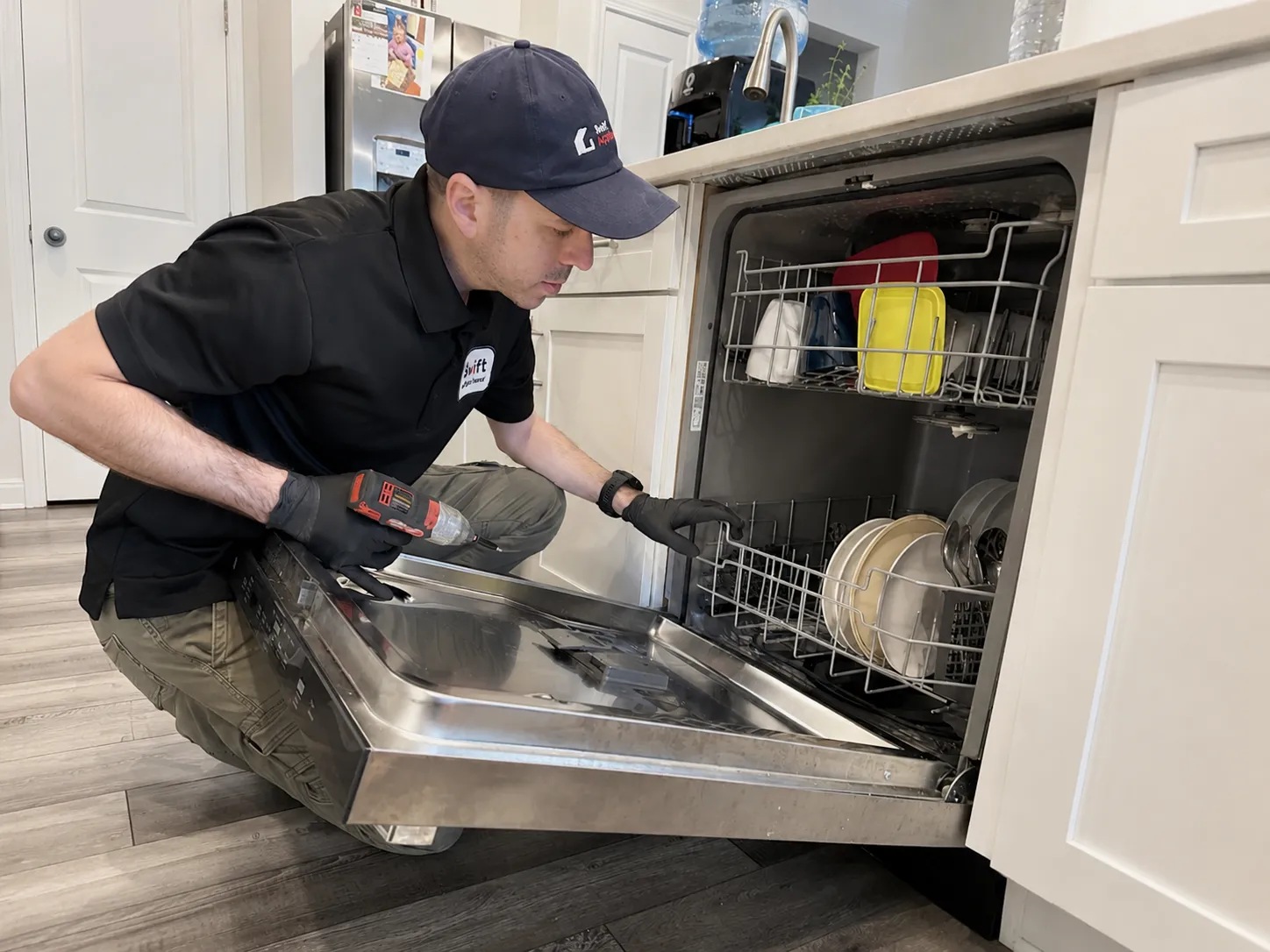
If the filter, disposal, air gap, and hose are all clear but the dishwasher still won't drain, the drain pump is the likely culprit. If you hear humming or buzzing during the drain cycle but no water moves, the pump motor may have failed or something is jammed in the impeller. Drain pump replacement requires disassembly and electrical testing — this is not a safe DIY repair and should be handled by a certified appliance technician. Learn more about what's involved in our dishwasher repair guide.
Safe DIY Checks: Step-by-Step
Confirm the cycle finished. If the dishwasher stopped mid-cycle, it may not have reached the drain stage. Press Cancel or Drain and wait.
Reset the dishwasher. Turn off the breaker or unplug for one minute, restore power, and try Cancel/Drain again.
Remove standing water safely. Use a cup, towels, or a wet/dry vacuum to clear the tub. Do not tip the dishwasher forward.
Clean the dishwasher filter. Remove the bottom rack, twist out the filter, rinse under warm water, and scrub away grease and food buildup.
Clear the sump area. Look under and around the filter for broken glass, food debris, labels, or small bones. Remove only what you can reach safely by hand.
Run the garbage disposal. Run it with cold water for 20 to 30 seconds to clear any blockage in the shared drain path.
Check and clean the air gap. Remove the cover and cap, clear visible debris, and run a short drain cycle.
Inspect the drain hose. Look under the sink for kinks, crushed sections, or a hose that has dropped too low. The hose should arc up high before connecting to the drain.
Do not use chemical drain cleaner. Drano, Liquid-Plumr, and similar products damage dishwasher hoses, seals, and internal plastic parts.
Stop before removing panels. If the dishwasher still won't drain after these steps, the problem is likely the drain pump, wiring, or control board — all of which require a technician.
Dishwasher Draining Symptoms and What They Mean
Large Pool of Standing Water After the Cycle
Start with the filter. Then run the garbage disposal. These two steps resolve the majority of dishwasher not draining complaints without any tools or parts.
Dishwasher Drains Slowly
A partial blockage is the usual cause. Clean the filter, check the air gap, and inspect the drain hose for buildup or a low-hanging section. Slow draining that gets worse over time typically means the filter hasn't been cleaned regularly.
Water Overflows from the Air Gap on the Counter
The dishwasher is draining — the blockage is between the air gap and the disposal or sink drain. Clear the air gap and make sure the disposal isn't clogged.
Dishwasher Hums During Drain Cycle but Won't Drain
The pump motor is running but cannot move water. This points to a jammed impeller or a failing drain pump motor. Stop DIY troubleshooting here and call a technician.
Dirty Water Returns to the Tub After Draining
The drain hose lacks a proper high loop, the air gap is clogged, or the disposal or sink drain is partially blocked. Water is draining out but siphoning back in. Repositioning the drain hose usually solves this.
Dishwasher Stopped Mid-Cycle With Water Inside
A power interruption, door latch issue, or control board fault can stop the cycle before the drain stage. Try a full reset and Cancel/Drain. If the problem repeats, the dishwasher needs professional diagnosis.
When to Stop DIY and Call a Technician
- Cleaning the filter and checking the disposal did not restore drainage. You've completed the safe homeowner steps — the fault is now internal.
- The dishwasher hums or buzzes during drain but water doesn't move. Likely a jammed impeller or failed drain pump motor requiring disassembly.
- Water is leaking under the dishwasher. A drain fault can stress hoses and seals. Stop running the machine and schedule service.
- An error code appears on the display. Drain-related error codes indicate a sensor or component fault that requires proper diagnostic tools to read and clear.
- The standing water problem returns after every cycle. Recurring drain failure means the root cause has not been identified — a technician can diagnose it properly.
- The dishwasher needs to be pulled out or panels removed. Any repair requiring access to internal components or wiring should be left to a licensed appliance repair professional.
The practical reality: catching a drain pump issue early — before a jammed impeller burns out the motor — usually costs significantly less to repair. If the basic homeowner checks don't fix it, schedule a dishwasher repair sooner rather than later — it saves money.