


KitchenAid is the premium kitchen line of Whirlpool Corporation, built on many of the same platforms as Whirlpool and JennAir but with heavier trim, more stainless and more features. That shared engineering means KitchenAid boards, pumps and sensors are well documented and generally easy to source.
The lineup leans toward built-ins: panel-ready dishwashers, built-in side-by-side and French-door refrigerators, wall ovens, dual-fuel and gas ranges, induction cooktops and wall-mount hoods. Our technicians service these built-in units in place. The repairs we see most are dishwasher boards and diverters, ice makers, igniters and induction electronics.
What breaks in KitchenAid refrigerators
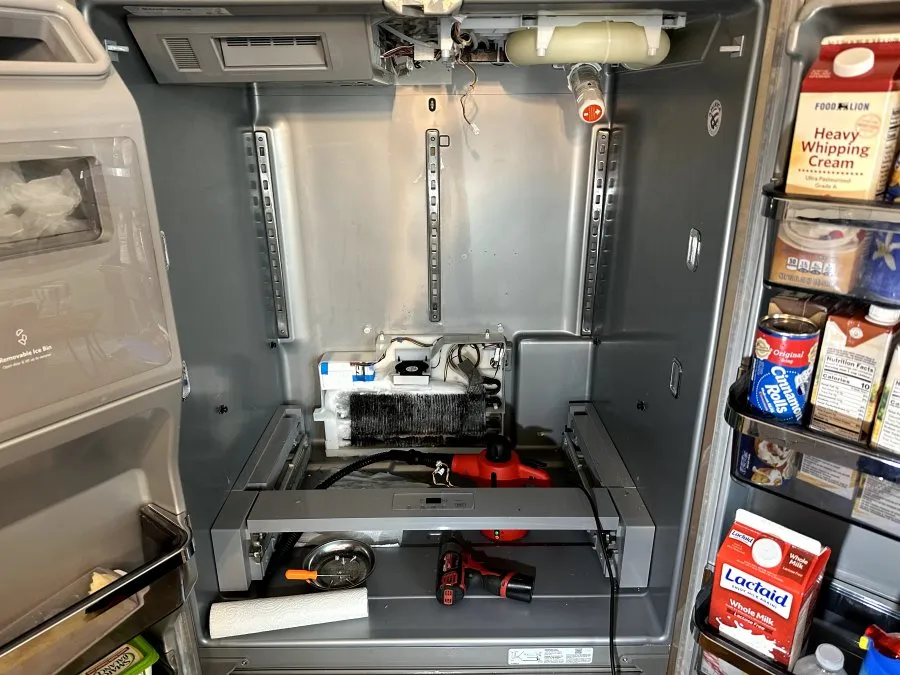
- French-door ice maker. Cold air is ducted from the freezer into an insulated ice compartment on the fresh-food side. Once its seal wears, humid air gets in and the bin frosts into a block. We thaw it, find the air leak and replace the seal, fan or ice maker.
- Built-in models running hot. KitchenAid built-ins carry the condenser up top behind the grille, where dust and a failed condenser fan make the compressor run long.
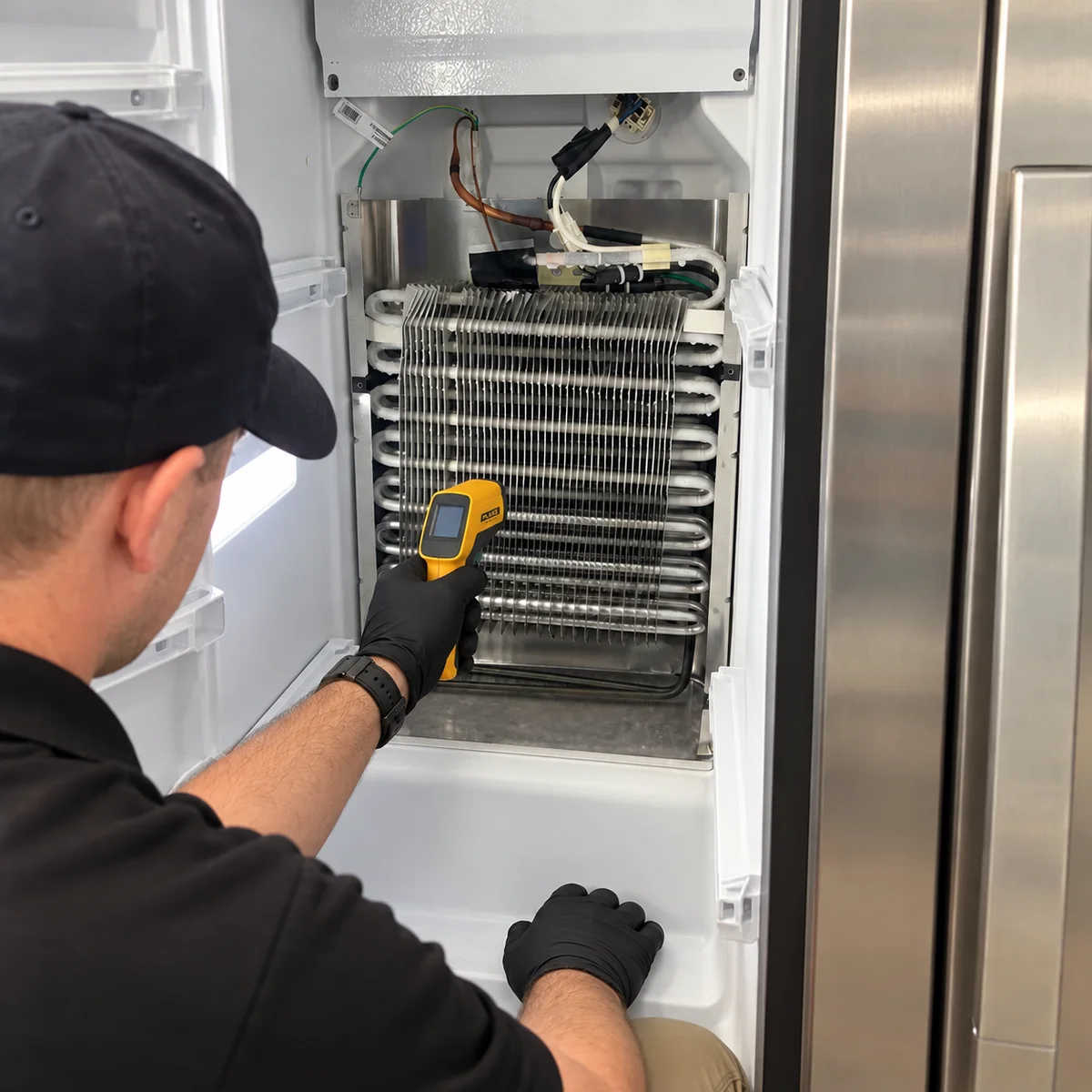
- Frost on the rear panel. The adaptive defrost board or defrost heater has failed, so the evaporator never clears.
- Sealed system. On built-ins the compressor is reached through the top grille, so leak repair, compressor replacement and recharge are done in place.
How a refrigerator repair visit goes
What breaks in KitchenAid dishwashers
- Dead keys or flashing lights. The control board sits in the door, where steam and leaks reach it. We test the door latch switch and touchpad first, because both mimic a board failure.
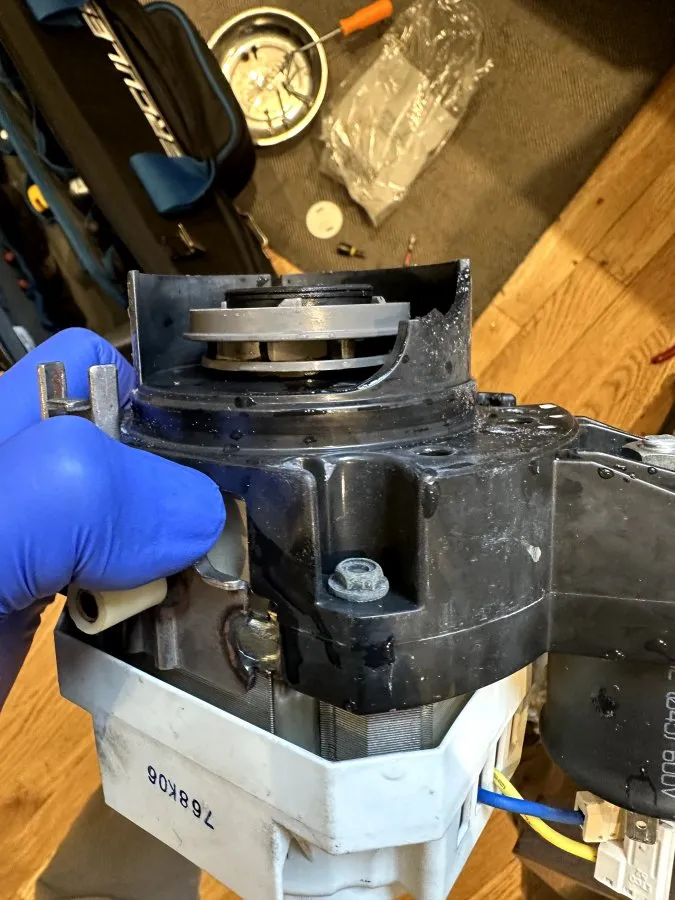
- One level not cleaning. A diverter motor sends water to the lower arm, the middle arm or the third-rack spray in turn; when it stalls, one level gets nothing.
- Not draining (F9E1). A clogged filter, a blocked air gap or drain hose, or a failed drain pump.
- Not filling (F8E1). The inlet valve or the float.
- Wet dishes. On ProDry models, the heater or drying fan.
- Panel-ready units. We remove the custom panel carefully to reach the door board.
How a dishwasher repair visit goes
What breaks in KitchenAid ranges and wall ovens
- Dual-fuel ignition. On KitchenAid dual-fuel ranges the burners are gas and the oven is electric. Spark igniters click nonstop when a switch gets wet, or spark weakly when the porcelain cracks; we test the spark module and switches.
- Even-Heat convection. The convection element behind the rear panel or its fan motor fails, and baking turns uneven. On models with a hidden bake element under the oven floor, a failure shows as a slow preheat, not a visible blister.
- Wall oven codes. F3E0 or F3E1 point to the oven sensor; F5E1 to the door latch, often after self-clean.
- Gas ovens. A weak glow-bar igniter delays ignition.
How an oven or range repair visit goes
What breaks in KitchenAid cooktops
- Induction zones dead. KitchenAid induction cooktops use generator boards that typically drive two zones each, plus a cooling fan beneath the glass. When a fan clogs, the boards overheat and zones shut down in pairs, which tells us where to look.
- Pan not detected. With proper cookware, a coil connection or board fault.
- Gas burners clicking. A wet spark switch or a cracked igniter.
- Radiant element dead. The element, limiter or touch board relay.
- Cracked glass. The top is replaced as one assembly.
How a cooktop repair visit goes
What breaks in KitchenAid microwaves
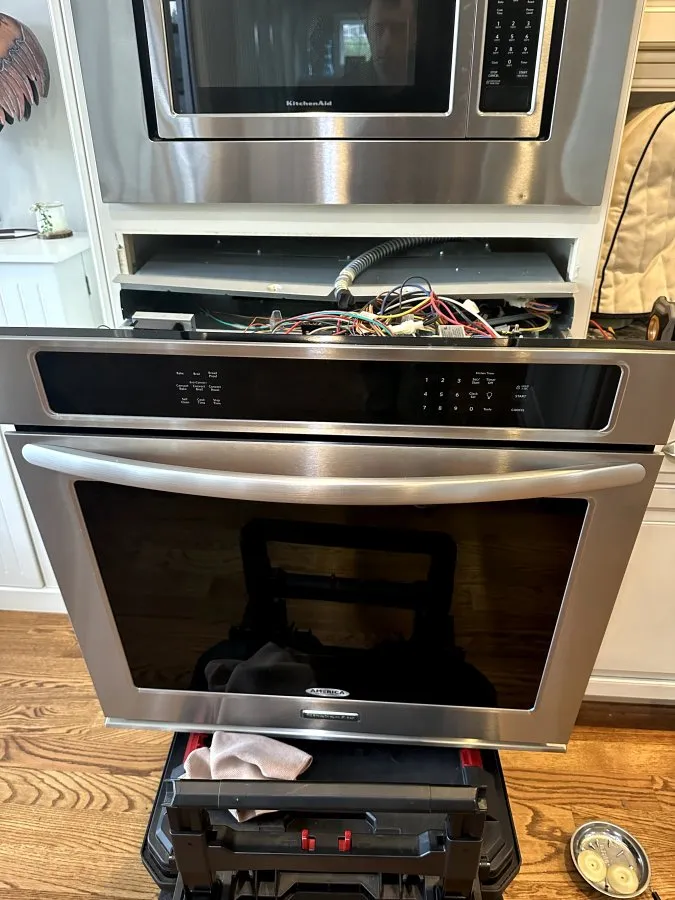
- Combination wall ovens. In KitchenAid units with a microwave above an electric oven, heat from the lower cavity works on the microwave's board and cooling fan; a failed fan leads to shutdowns mid-cycle.
- No heat. Magnetron, high-voltage diode or capacitor, tested after discharge.
- Convection microwaves. The convection element or its fan.
- Door switches. Worn interlocks on over-the-range models can blow the line fuse.
- Keys dead. Touch panel or ribbon cable.
How a microwave repair visit goes
What breaks in KitchenAid range hoods
- Blower weak or loud. A grease-loaded wheel, worn motor bearings or a failing capacitor in KitchenAid wall, island and insert hoods.
- Hood turns on by itself. Many KitchenAid hoods have a heat sensor that starts the blower when the cooktop gets hot; a failing sensor runs the fan constantly.
- Controls dead. The push-button or touch control board.
- Lights out. The LED module or its driver.
- Poor capture. Clogged baffle filters or a stuck damper.
How a range hood repair visit goes
Parts and warranty on KitchenAid repairs
We install only KitchenAid OEM parts. Most KitchenAid dishwasher, refrigerator and range parts are shared with Whirlpool platforms and usually arrive within a few business days. Trim pieces, colored knobs, cooktop glass and built-in refrigerator components can take longer. If your KitchenAid is still under the manufacturer's warranty, contact KitchenAid first, since that coverage is handled by the manufacturer. Every repair we do comes with a 90-day labor warranty.
KitchenAid codes we see most often
These are the display codes that bring us the most KitchenAid calls. The wording is ours, and the meaning can shift between model years, so treat the table as a starting point: a technician confirms the cause with tests before any part is replaced.
| Code | Appliance | What it usually points to |
|---|---|---|
| F8E1 | Dishwasher | Not enough water entered; inlet valve, supply line or float |
| F9E1 | Dishwasher | Drain took too long; filter, drain hose, air gap or drain pump |
| F7E1 | Dishwasher | Water not heating as expected; heater, high limit or relay |
| F3E0 | Oven & range | Oven sensor circuit open; failed sensor or loose harness |
| F3E1 | Oven & range | Oven sensor circuit shorted; sensor or pinched wiring |
| F5E1 | Oven & range | Door latch position not confirmed; latch switch or lock motor |
| F2E0 | Oven & range | Touch panel reports a stuck or shorted key |