


Whirlpool Corporation builds Whirlpool, Maytag, KitchenAid, JennAir and Amana on shared platforms, so a Whirlpool washer, dishwasher or range often uses the same boards, pumps and sensors as its siblings. For a technician that means well-mapped failure patterns and widely stocked parts.
Whirlpool laundry reports faults as F-codes, such as F5E2 or F8E1, that name a system and a fault. Refrigerators use adaptive defrost boards instead of mechanical timers. Most Whirlpool appliances have a service diagnostic mode, and our technicians use it to run each component before deciding what has failed.
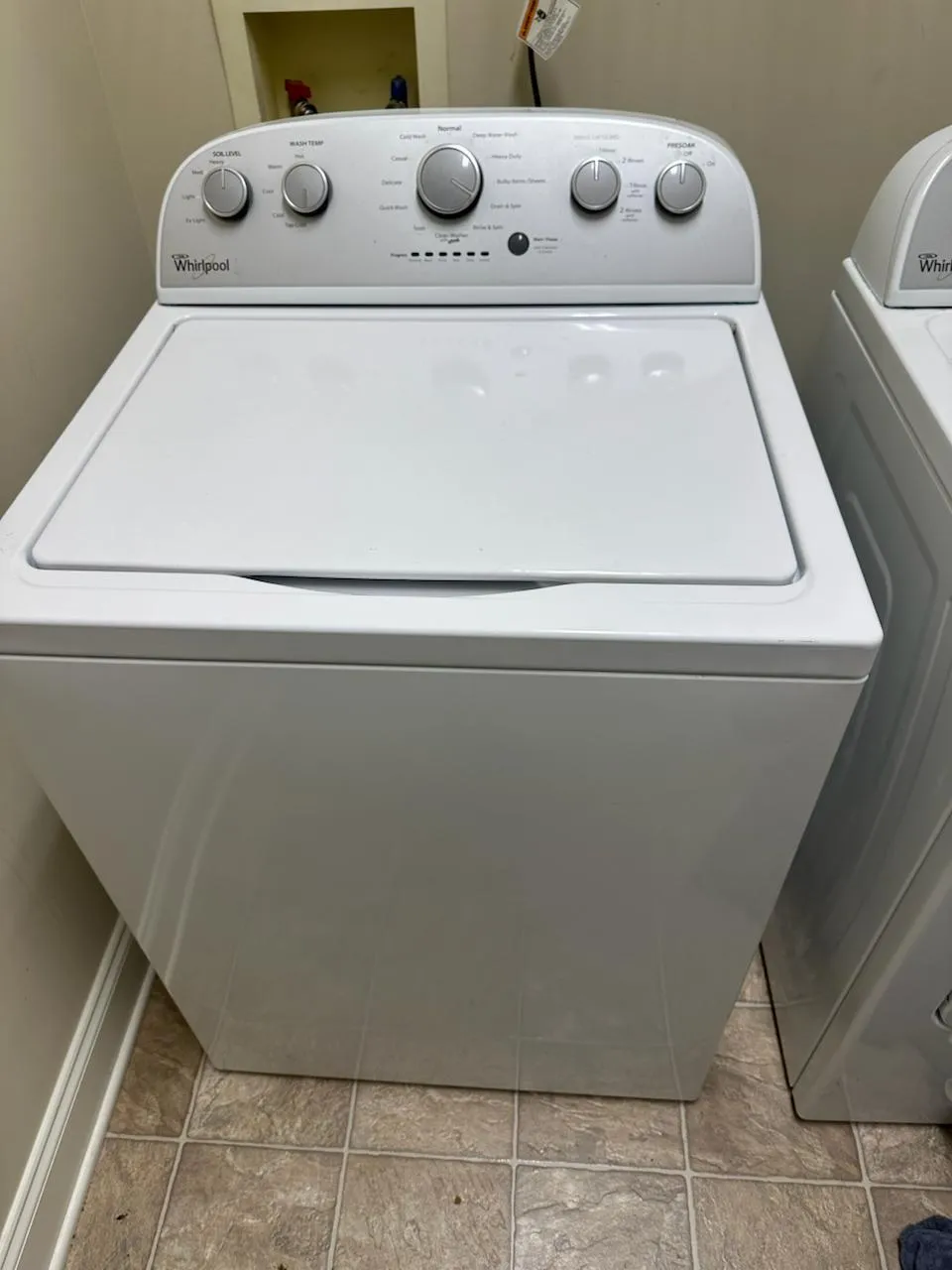
What breaks in Whirlpool washers
- Shifter (F7E5). On newer Whirlpool top loaders the shifter moves the drive between agitate and spin; when it fails, the washer stalls in one mode.
- Lid lock (F5E2, F5E3). Cabrio and newer top-load lid locks wear out and stop the cycle; we replace the lock assembly.
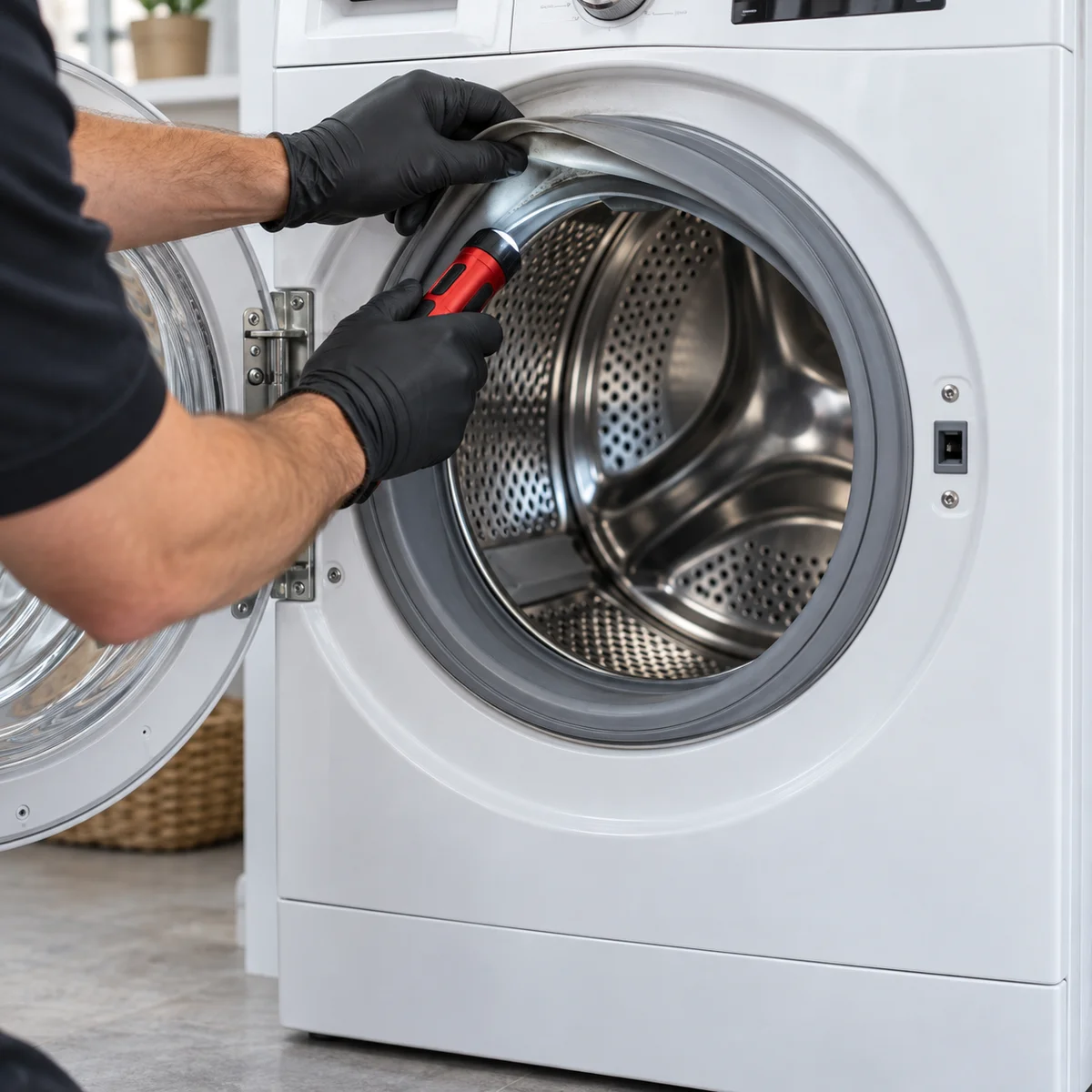
- Front-load codes. F8E1 is a long fill, F9E1 a long drain, usually a clogged pump filter, and F7E1 points to the motor or its control.
- Cabrio banging. Worn suspension rods let the tub hit the cabinet in spin.
How a washer repair visit goes
What breaks in Whirlpool dryers
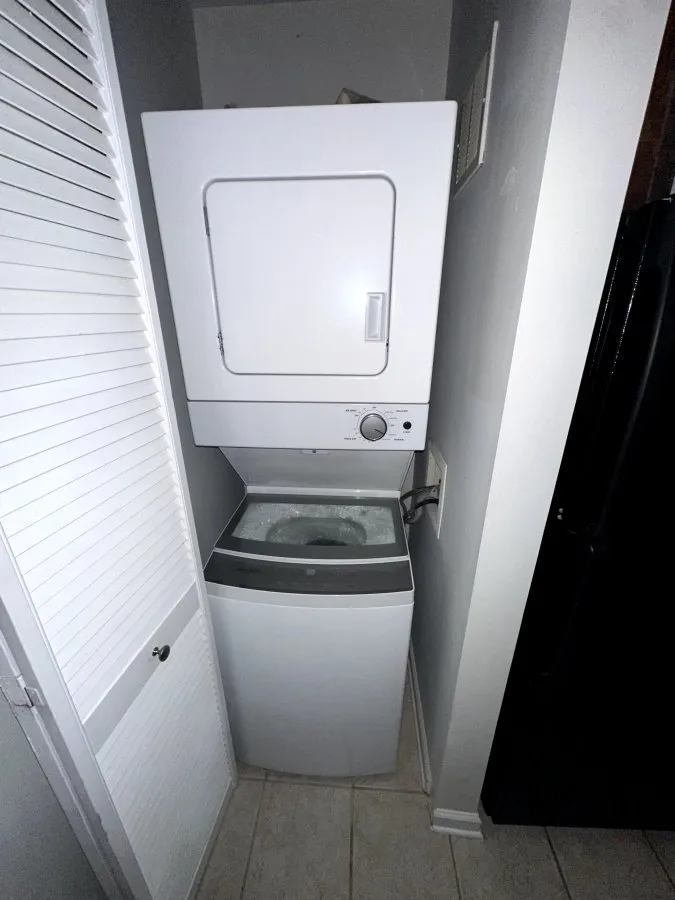
The Whirlpool 29-inch dryer has changed little in decades, so its weak points are familiar.
- No heat, electric. An open element, high limit or thermal cut-off on the heater housing; a tripped cut-off means poor airflow, so we check the vent run.
- No heat, gas. The igniter glows but never lights the flame: weak gas valve coils.
- Thump or squeal. Drum support rollers, idler pulley, belt and front drum glides.
- Will not start. Thermal fuse on the blower housing, door switch or motor.
What breaks in Whirlpool refrigerators
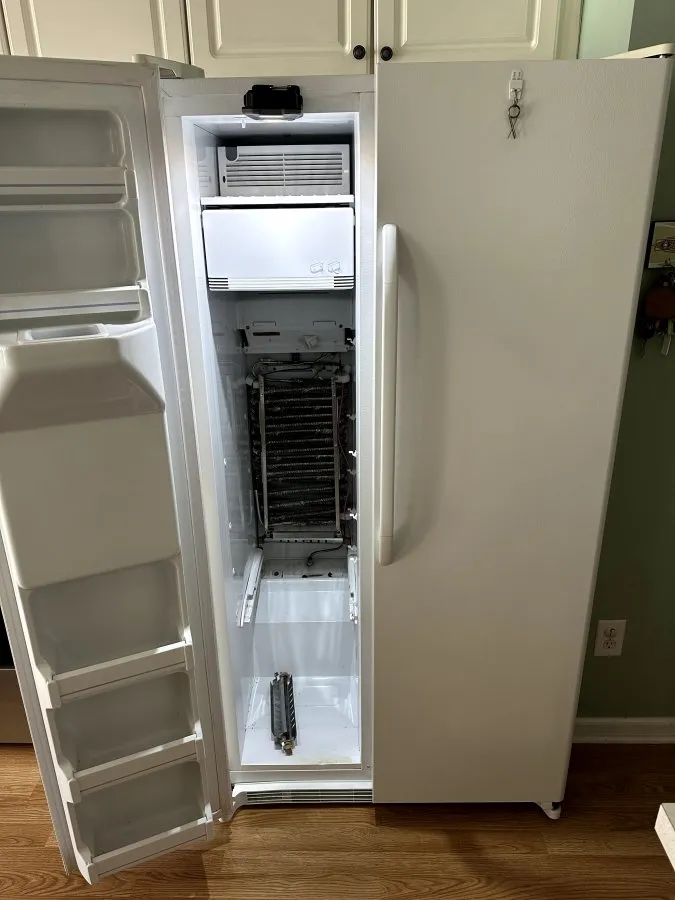
- Frost on the evaporator. The Whirlpool adaptive defrost board times defrost from compressor run time and door openings. When the board, defrost heater or bimetal fails, the coil frosts solid and the fresh-food side warms.
- Compressor clicking. On many models the plug-on start relay fails before the compressor; we test both.
- Ice maker not filling. A frozen fill tube or a weak water valve.
- Fans. Evaporator and condenser fan motors.
- Sealed system. Compressor, evaporator and leak repair with recharge, done in place.
How a refrigerator repair visit goes
What breaks in Whirlpool dishwashers
- Poor washing. Newer Whirlpool dishwashers use a removable filter instead of a grinder; when it clogs, wash pressure drops and the pump strains.
- One rack dirty. On many models a diverter motor alternates water between spray arms; when it stops, one level gets nothing.
- Not draining. The drain pump or its check valve.
- Wet or cold. The heating element in the tub floor, its high limit, or a control board relay.
- Door drops open. Broken hinge cables or springs.
How a dishwasher repair visit goes
What breaks in Whirlpool ranges and wall ovens
- Gas oven slow to light. A weak glow-bar igniter cannot draw enough current to open the Whirlpool safety valve.
- F3 codes. The oven temperature sensor or its harness; we measure resistance at the board.
- Heats when off, or not at all. A relay on the control board has welded shut or burned open.
- Electric element burnt. A blistered bake element is visible; broil elements fail too.
- Locked after self-clean. The door lock motor or its switch.
How an oven or range repair visit goes
What breaks in Whirlpool cooktops
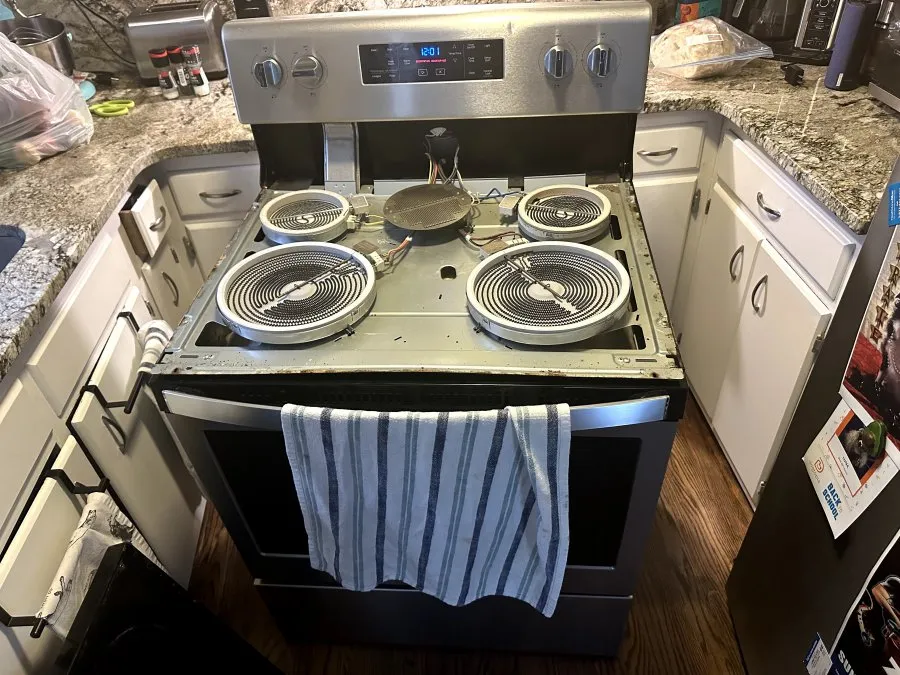
Most Whirlpool cooktops are knob-controlled radiant or gas models, with a smaller induction line.
- Element stuck on high, or dead. Each knob drives an infinite switch; burnt contacts give full power or none.
- Hot-surface light stays lit. The limiter inside the element or the indicator circuit.
- Burners clicking. Spark switches on the valve stems stick after spills.
- Induction zone off. The power board or its cooling fan.
- Cracked glass. The radiant top is replaced as one assembly with new seals.
How a cooktop repair visit goes
What breaks in Whirlpool microwaves
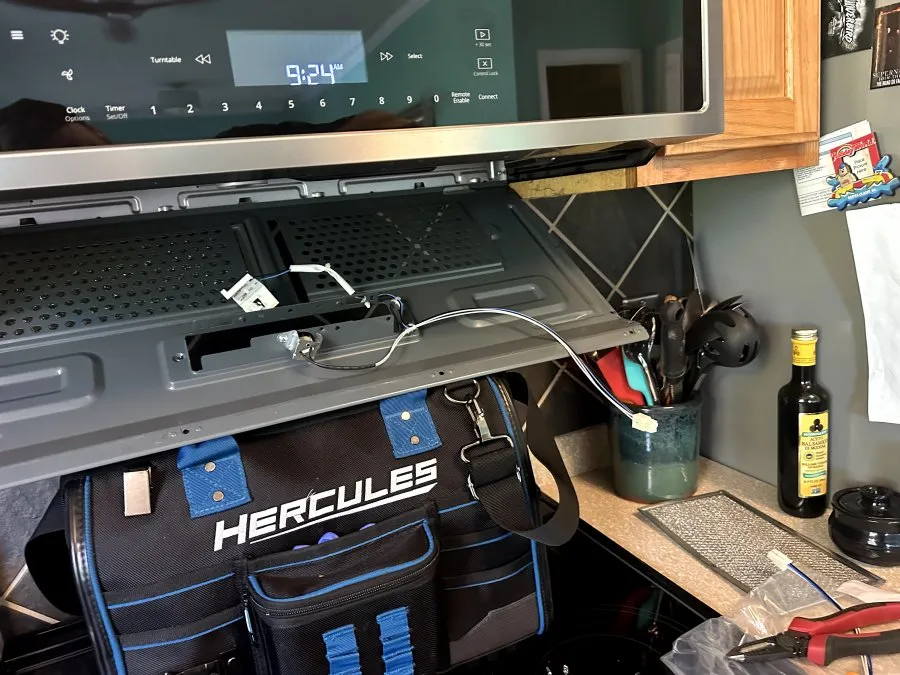
Most Whirlpool microwaves we open are over-the-range units that take steam and grease from the range below.
- No heat. The magnetron, the high-voltage diode or the capacitor; we discharge the capacitor before any test.
- Line fuse blows when the door opens. The monitor switch shorts the line on purpose when a primary interlock sticks closed or the latch is out of adjustment; we replace the door switches as a set.
- Keypad dead. The membrane or control board.
- Vent fan or light out. The fan motor, its relay or the thermal cut-out.
- Turntable stopped. The turntable motor under the cavity floor.
How a microwave repair visit goes
What breaks in Whirlpool range hoods
Whirlpool under-cabinet and wall hoods are simple: a blower, a switch, a light and a damper.
- Blower slow or loud. A grease-loaded wheel or worn motor bearings.
- Stuck on one speed. The slide or push-button switch has failed.
- Light out. The socket, or the LED board on newer hoods.
- Cold draft or rattle. A stuck or loose damper in the duct transition.
- Fan runs but moves little air. A clogged grease filter, or a duct run with too many bends.
How a range hood repair visit goes
Parts and warranty on Whirlpool repairs
We install only Whirlpool OEM parts. Because Whirlpool shares parts with Maytag, KitchenAid and Amana, its boards, pumps, lid locks, shifters and igniters are among the easiest to source, usually within a few business days. Older models often take a superseded part number that replaces the original. If your Whirlpool is still under the manufacturer's warranty, contact Whirlpool first; that coverage is handled by Whirlpool. Our repairs carry a 90-day labor warranty.
Whirlpool codes we see most often
These are the display codes that bring us the most Whirlpool calls. The wording is ours, and the meaning can shift between model years, so treat the table as a starting point: a technician confirms the cause with tests before any part is replaced.
| Code | Appliance | What it usually points to |
|---|---|---|
| F5E2 | Washer | Door or lid will not lock; lock assembly, switch or wiring |
| F5E3 | Washer | Door or lid will not unlock when the cycle ends |
| F7E5 | Washer | Shifter cannot move the drive between agitate and spin |
| F8E1 | Washer | Fill took too long; supply valves, hoses or inlet valve |
| F9E1 | Washer | Drain took too long; clogged pump filter or failed drain pump |
| F7E1 | Washer | Motor speed not detected; motor, motor control or wiring |
| F0E2 | Washer | Too many suds detected; usually too much or the wrong detergent |
| F3E1 | Oven & range | Oven temperature sensor circuit reads shorted; sensor or harness |