


LG builds most of its lineup on inverter technology: linear compressors in the refrigerators, direct-drive motors in the washers, inverter wash motors in the dishwashers. With fewer belts and gears to wear, LG failures tend to be electrical: a stator winding, a hall sensor, a board, a thermistor, or a compressor that has lost capacity.
LG codes are specific, and most LG appliances have a test mode that lets our technicians run the pump, motor or valves one at a time, separating a failed part from a wiring fault before anything is ordered.
What breaks in LG refrigerators
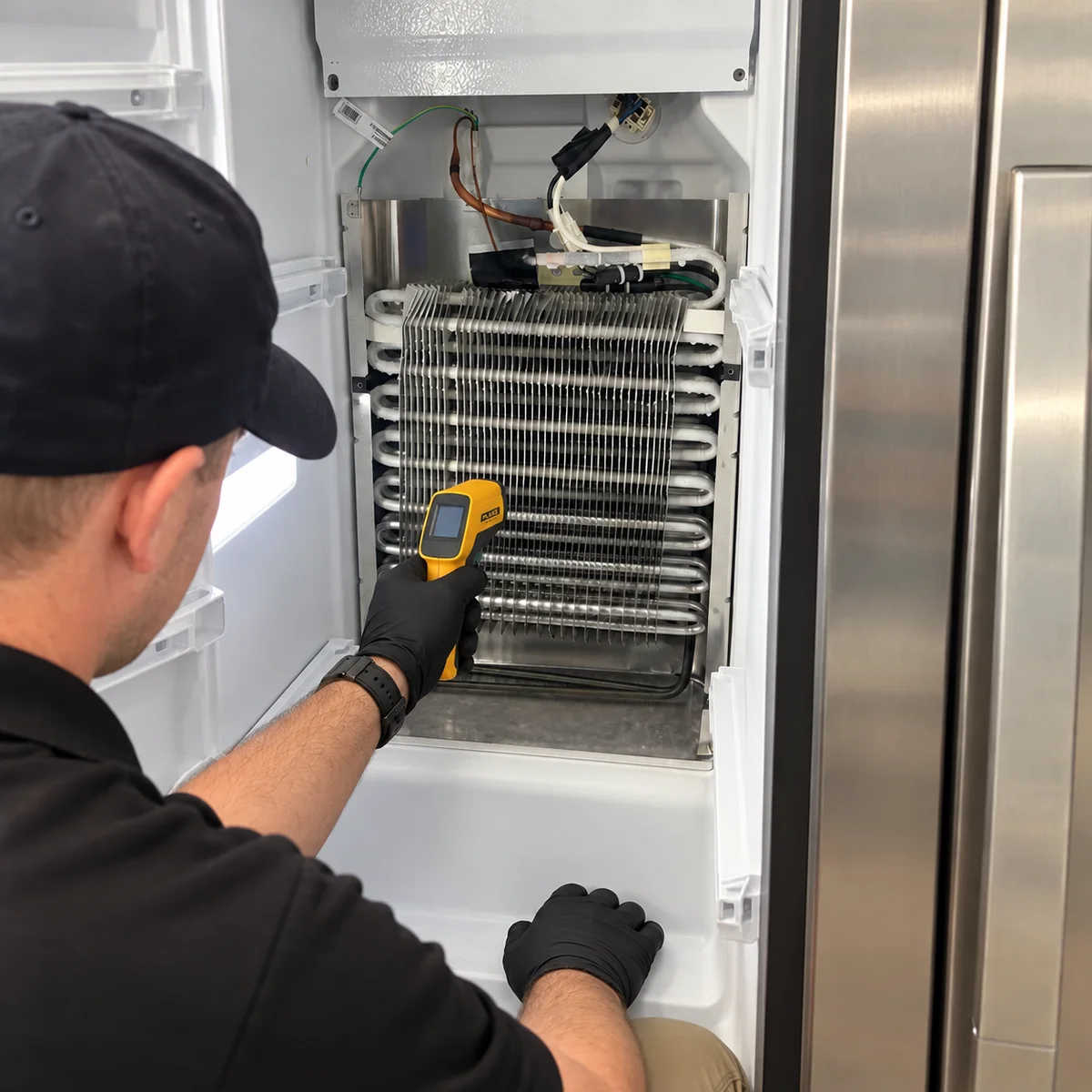
- Linear compressor losing capacity. The fresh-food side warms over weeks while the freezer stays colder. Our sequence: confirm fans and defrost work, check compressor wiring and windings, test the board's compressor output, then read the evaporator temperatures. A confirmed failure is a sealed-system job: compressor, leak check, recharge.
- Door ice maker frosting. A weak ice compartment seal or fan builds frost and jams the auger.
- Er FF or Er dH. Ice on the freezer fan, or an open defrost heater circuit.
How a refrigerator repair visit goes
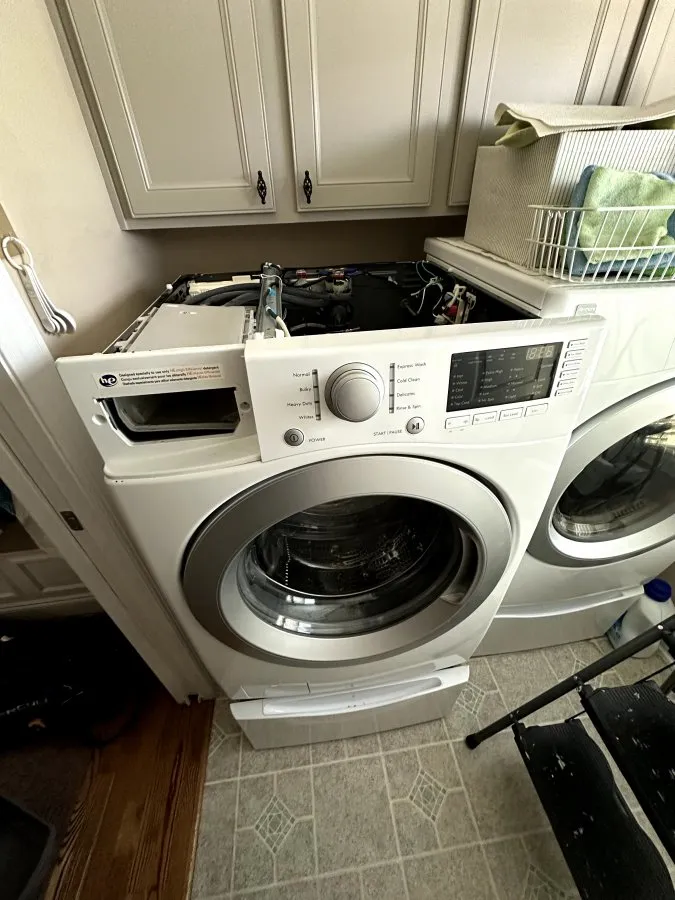
What breaks in LG washers
- OE, not draining. On LG front loaders the pump filter behind the lower access cover catches coins and lint; if it is clean, we test the pump and hose.
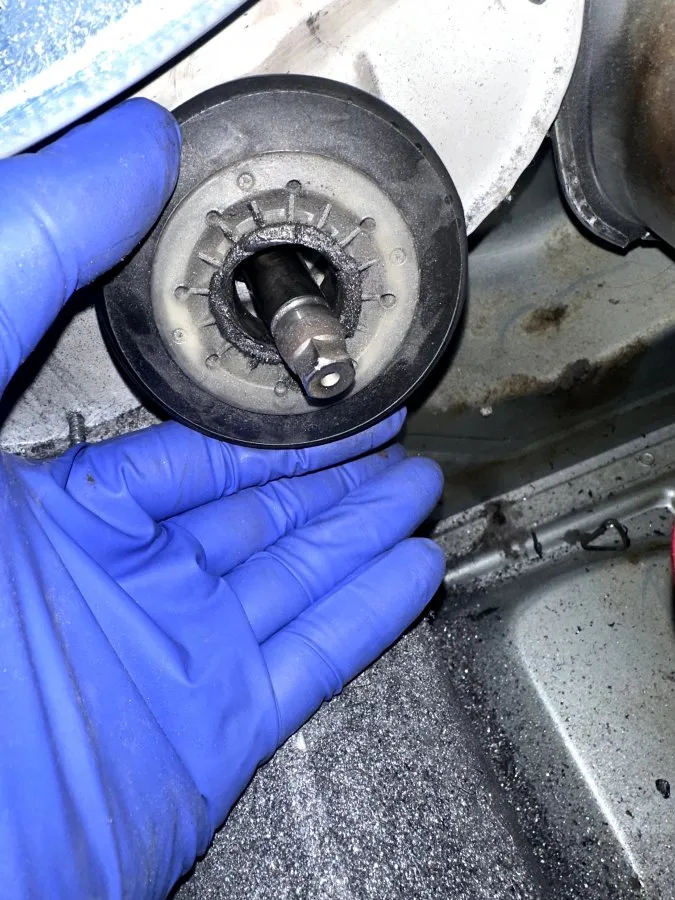
- LE, locked motor. The direct-drive stator, the hall sensor mounted on it, or the harness. We read the hall sensor and stator windings before replacing either.
- UE on normal loads. Worn shock absorbers on front loaders, suspension rods on top loaders.
- Roar in spin. Tub bearings, usually after the rear seal let water in.
How a washer repair visit goes
What breaks in LG dryers
- d80, d90 or d95. LG dryers sense airflow and flag an exhaust that is 80, 90 or 95 percent restricted. We check the vent run and blower path; the reading is usually right.
- No heat. Thermal fuse or high limit, the element on electric models, igniter or valve coils on gas.
- tE1 or tE2. A thermistor or its connector.
- Stops early or runs long. Coated moisture sensor bars inside the lint opening.
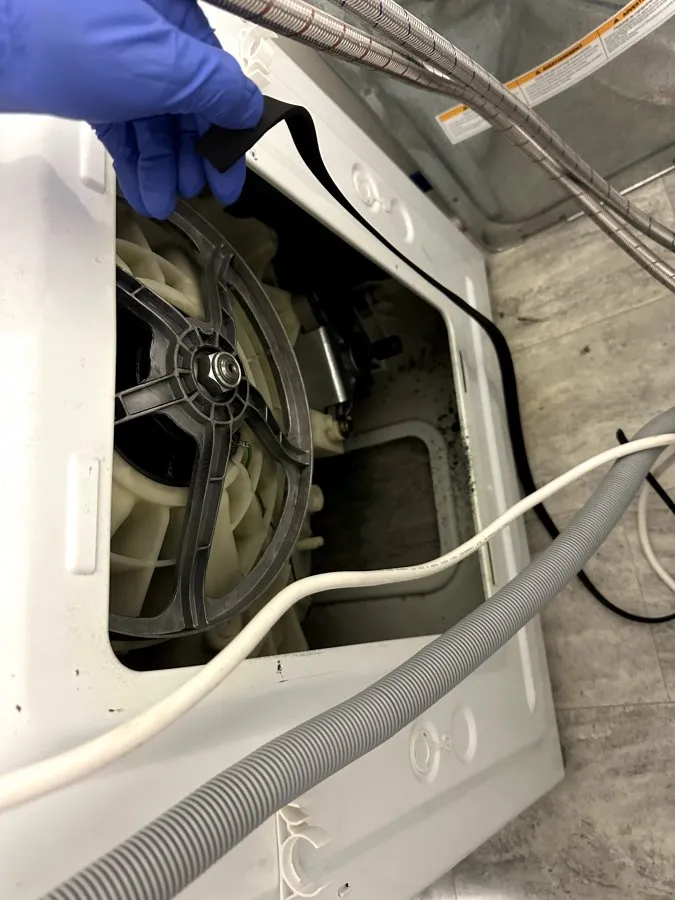
- Noise. Drum rollers, idler pulley or belt.
What breaks in LG dishwashers
- HE, no heat. The control does not see the water temperature rise. We test the heater, the heater relay on the main board and the wiring, in that order.
- tE, sensor fault. The thermistor reads out of range, usually the sensor itself or its connector.
- AE, leak. Water in the base trips the float; door gasket, sump and hoses are the usual sources.
- OE, not draining. Filter, drain pump or a kinked hose.
- LE, wash motor. The direct-drive inverter wash motor or its wiring.
- QuadWash arms. The multi-motion spray arms jam on debris.
How a dishwasher repair visit goes
What breaks in LG ranges and wall ovens
- Gas oven slow to light. LG gas ovens light with a hot-surface igniter wired in series with the safety valve, so an igniter that glows but draws too little current leaves the valve shut. A current reading separates it from a failed valve.
- ProBake models heating poorly. The element sits behind the rear wall with the convection fan, so a failed element or fan motor shows up as long preheats.
- Locked after self-clean. The door lock motor and switch fail after high-heat cycles. EasyClean is a short low-heat cycle and does not lock the door.
- Touch panel or control board. Dead keys, or relays that stick and keep an element on.
How an oven or range repair visit goes
What breaks in LG cooktops
LG sells induction, radiant and gas cooktops under the LG and LG Studio names.
- Induction zones shut off. The inverter board and its cooling fan under the glass; a dusty fan lets the board overheat.
- Radiant element dead. Either the element itself, its thermal limiter or the relay that feeds it.
- Gas ignition clicking. Moisture in a spark switch after a spill, or a cracked igniter.
- Hot-surface light stuck on. A limiter or a touch board signal fault.
How a cooktop repair visit goes
What breaks in LG microwaves
- No heat. On transformer models, the magnetron, diode or capacitor. On NeoChef and other LG inverter models, an inverter board drives the magnetron, so we test it first.
- Door switches. Over-the-range models wear their latch switches; a failed monitor switch blows the line fuse.
- Keys dead. The touch membrane or control board.
- ExtendaVent fan weak. The fan motor, its relay or a grease-loaded wheel.
- Turntable stopped. The turntable motor or a cracked coupler under the tray.
How a microwave repair visit goes
What breaks in LG range hoods
- Blower weak or noisy. Grease on the wheel or worn motor bearings in LG and LG Studio hoods.
- Controls unresponsive. The touch board or membrane.
- LED lights out. The LED module or its driver.
- Hood not syncing. LG hoods that link to an LG range or cooktop, directly or through ThinQ, can drop the pairing; we re-pair them or replace the control.
- Damper rattle. A loose back-draft flap in the duct.
How a range hood repair visit goes
Parts and warranty on LG repairs
We install only LG OEM parts. Stators, hall sensors, drain pumps, ice makers and control boards for LG appliances are generally easy to source; linear compressors and some range and hood parts take longer. If your LG is under its manufacturer's warranty, contact LG first, since that coverage is handled by LG, and LG covers the linear compressor and direct-drive motor longer on many models. Our repairs carry a 90-day labor warranty.
LG codes we see most often
These are the display codes that bring us the most LG calls. The wording is ours, and the meaning can shift between model years, so treat the table as a starting point: a technician confirms the cause with tests before any part is replaced.
| Code | Appliance | What it usually points to |
|---|---|---|
| OE | Washer | Water is not draining; pump filter, hose or drain pump |
| IE | Washer | Not enough water coming in; supply, hoses or inlet valve |
| UE | Washer | Load out of balance and spin cut short; suspension if frequent |
| LE | Washer | Motor locked or not turning; stator, hall sensor or wiring |
| d80 | Dryer | Exhaust airflow about 80 percent restricted; the vent run needs attention |
| AE | Dishwasher | Leak detected in the base pan; the float switch has tripped |
| tE | Dishwasher | Thermistor reading out of range; sensor, its wiring or connector |
| Er FF | Refrigerator | Freezer fan is not running, often iced over or failed |