Quick Answer
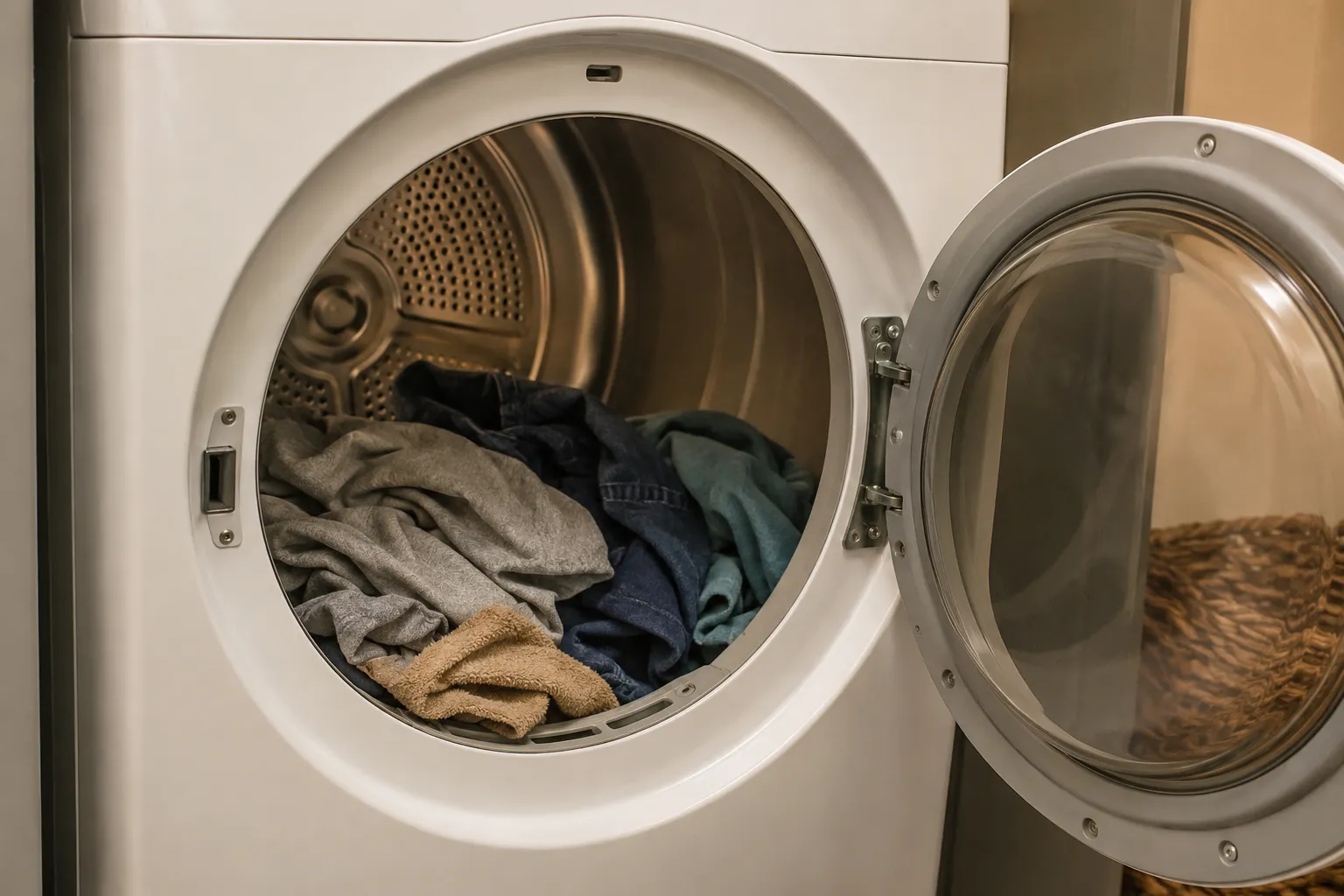
When clothes need a second cycle, check airflow first. A clogged lint screen, crushed vent hose, or blocked outside vent can slow drying even when the dryer feels hot. A packed drum or clothes that leave the washer unusually wet can do the same.
If a normal load still dries slowly after those checks, watch whether the dryer heats throughout the cycle or stops while clothes are damp. That helps separate a heating problem from an automatic-cycle problem.
Most Likely Causes
1. Restricted airflow
Moving air carries moisture out of a vented dryer. A lint-coated screen, kinked hose, clogged duct, or stuck outside flap often leaves clothes damp while the dryer feels hot. You can clear accessible lint. A blockage deeper in the duct needs vent cleaning.
2. An overloaded drum or clothes that went in too wet
Clothes need room to tumble. A packed drum leaves damp pockets, and a weak washer spin makes any dryer cycle take longer. Both are safe to check by trying a smaller, well-spun load.
3. An automatic cycle that ends too soon
Moisture-sensor bars help many dryers decide when to stop. A small load may miss them, and residue can affect their reading. If timed dry works but automatic dry leaves clothes damp, check the setting and clean the accessible bars shown in your owner's manual. A sensor or control fault needs diagnosis.
4. Weak or intermittent heat
An electric heating element makes heat. A gas dryer uses an igniter and burner. A fault in either heating system or its temperature controls may leave the drum turning but the clothes damp. If the dryer never gets warm, see our dryer not heating guide.
5. An open thermal fuse
The thermal fuse is a safety device that opens when conditions get too hot. Depending on the model and fuse location, the dryer may stop running or tumble without heat. It does not usually cause merely weak heat. A technician should test it and find what caused it to open before replacing it.
Safe Checks to Do First
- Clean the lint screen. If it has a waxy film, wash it with mild soap and water. Let it dry fully before reinstalling it.
- Try a smaller, well-spun load on a suitable timed-dry setting. If laundry leaves the washer dripping or unusually heavy, address the washer spin problem first.
- Unplug the dryer before touching the vent hose. Check any section you can reach without moving the dryer for crushing or visible lint. Do not move a gas dryer or strain its connection.
- On a vented dryer, check the outside outlet from a safe, ground-level spot while the dryer runs. The flap should open and air should flow out. If the outlet is on the roof or airflow stays weak after accessible lint is cleared, arrange vent cleaning. Do not run the dryer with its vent disconnected indoors.
- If timed dry works but automatic cycles stop early, unplug the dryer and wipe the accessible moisture-sensor bars shown in your owner's manual with a damp cloth. Dry them before running a load.
What the Symptoms Usually Mean
Clothes stay damp, but the dryer feels hot
This most often points to restricted airflow. Heat is present, but moist air is not leaving fast enough.
The dryer takes two cycles for large loads
An overloaded drum is the likely cause if smaller loads dry normally. If every load takes too long, look beyond load size.
Timed dry works, but automatic dry stops early
The load may not be contacting the moisture-sensor bars, especially if it contains just one or two items. A sensor or control problem becomes more likely if normal-size loads also stop early.
The dryer is slow to heat up or never feels warm
Once airflow and load size check out, a heating fault is more likely. A dryer that never heats belongs with the dryer not heating guide.
When to Stop DIY and Call a Technician
Stop using the dryer if you smell burning, see scorching, or find that exhaust airflow remains weak. Do not remove screwed panels or keep resetting a breaker that trips. An electric dryer can tumble even when part of its 240-volt supply is missing.
If you smell gas, do not use switches or flames. Leave the home and call the gas utility or 911 from outside.
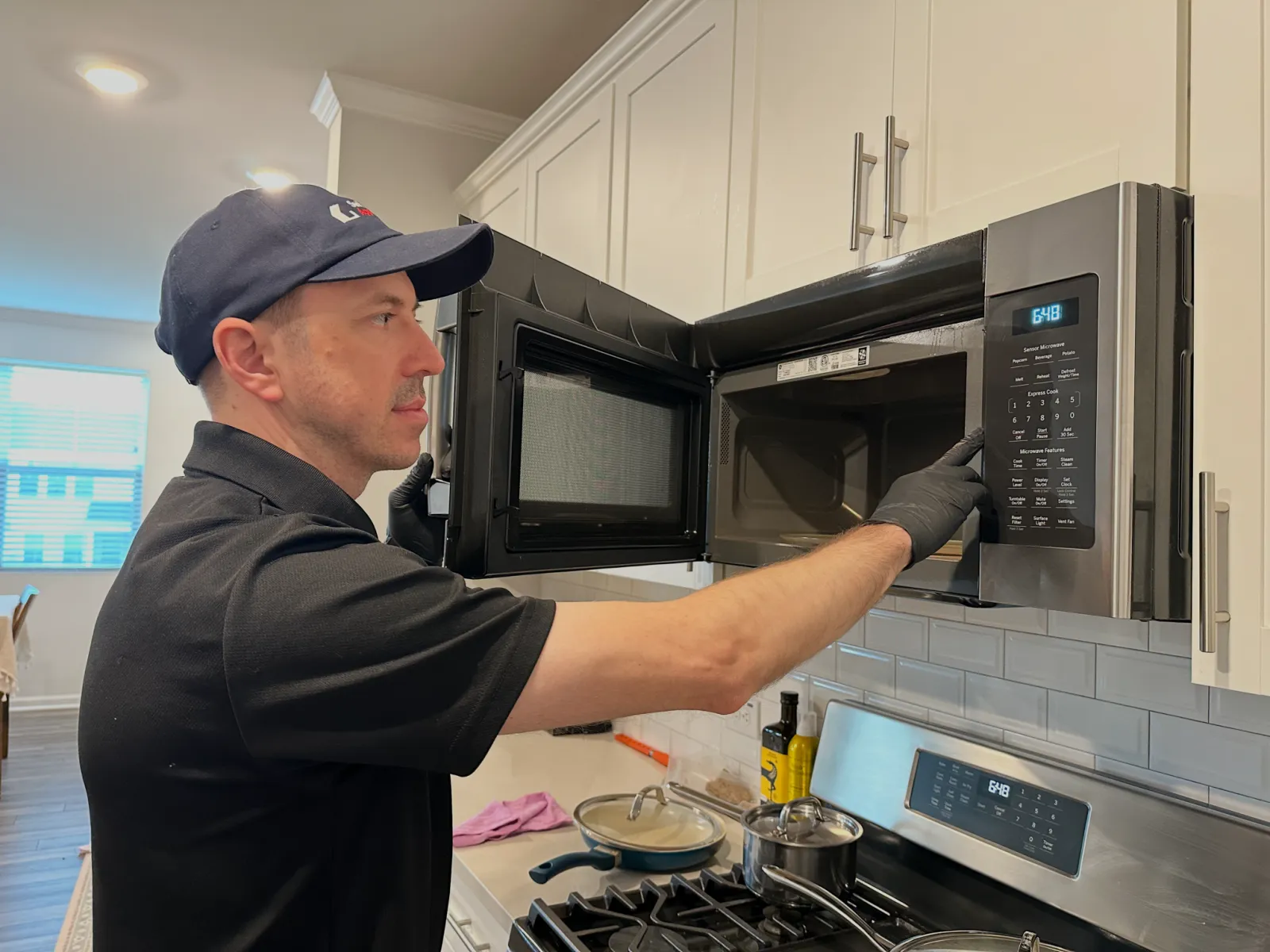
If airflow is good but drying still takes too long, or heat cuts out during the cycle, schedule dryer repair service. Internal electrical, gas, and heating-system diagnosis is technician work.
From Our Repair Log
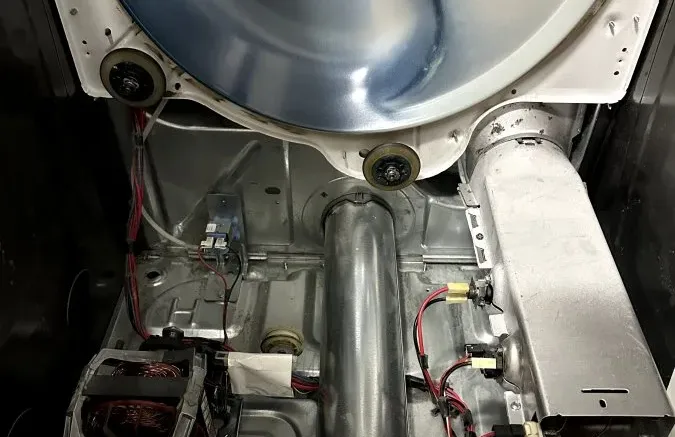
October 2026: Whirlpool Dryer Not Heating. Repair in Willow Spring
We diagnosed the dryer and found that the heating element had no resistance and needed replacement. We also found heavy lint buildup inside the dryer, along with a long, kinked exhaust hose that was clogged with lint.