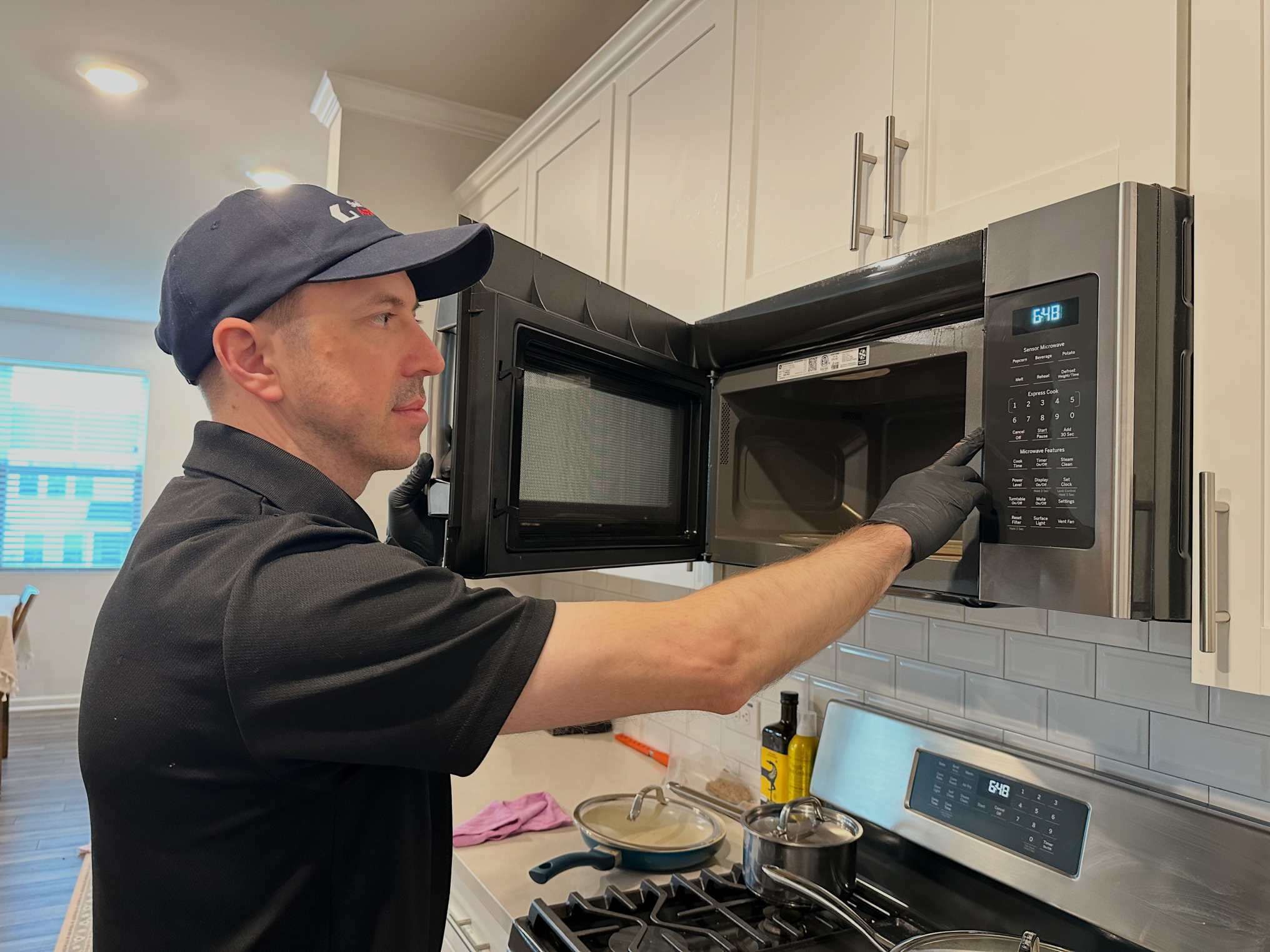
Microwave Not HeatingYour microwave is running — the light comes on, the turntable spins, the fan hums — but the food comes out stone cold. Before assuming the worst, many microwave not heating problems are caused by something as simple as a wrong setting or a loose door latch, not a failed part. This guide walks you through what to check, what the symptoms usually mean, and — critically — where to stop, because microwaves are genuinely dangerous to open without proper training.
Important safety note: Unlike most home appliances, a microwave contains a high-voltage capacitor that can hold a lethal electrical charge even after the unit is unplugged. Do not open the cabinet or touch internal components under any circumstances. Homeowner checks stop at the plug, the settings, and the door latch.
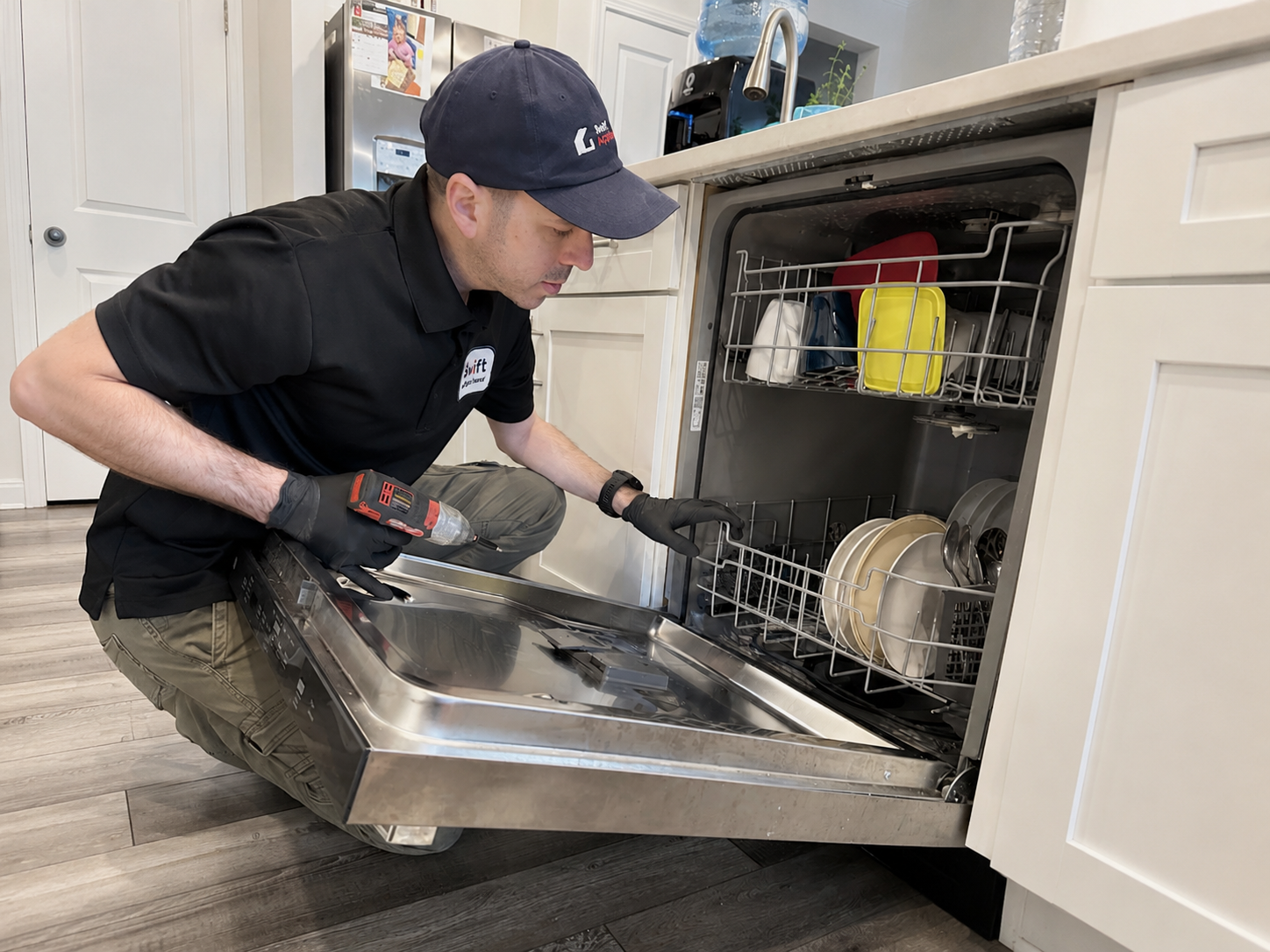
Dishwasher Not DrainingYou open the dishwasher after the cycle and find standing water covering the bottom of the tub. Before you call anyone, the good news is that most dishwasher draining problems are caused by something simple you can fix yourself in under 15 minutes. This guide covers the most common reasons a dishwasher won't drain, the safe checks homeowners can do right now, and the signs that it's time to call a professional appliance technician. If you'd rather skip the troubleshooting, our dishwasher repair service is available for fast, same-day diagnosis.
One thing to skip: do not pour Drano or any chemical drain cleaner into the dishwasher. It will damage the rubber seals and hoses and make the problem worse.
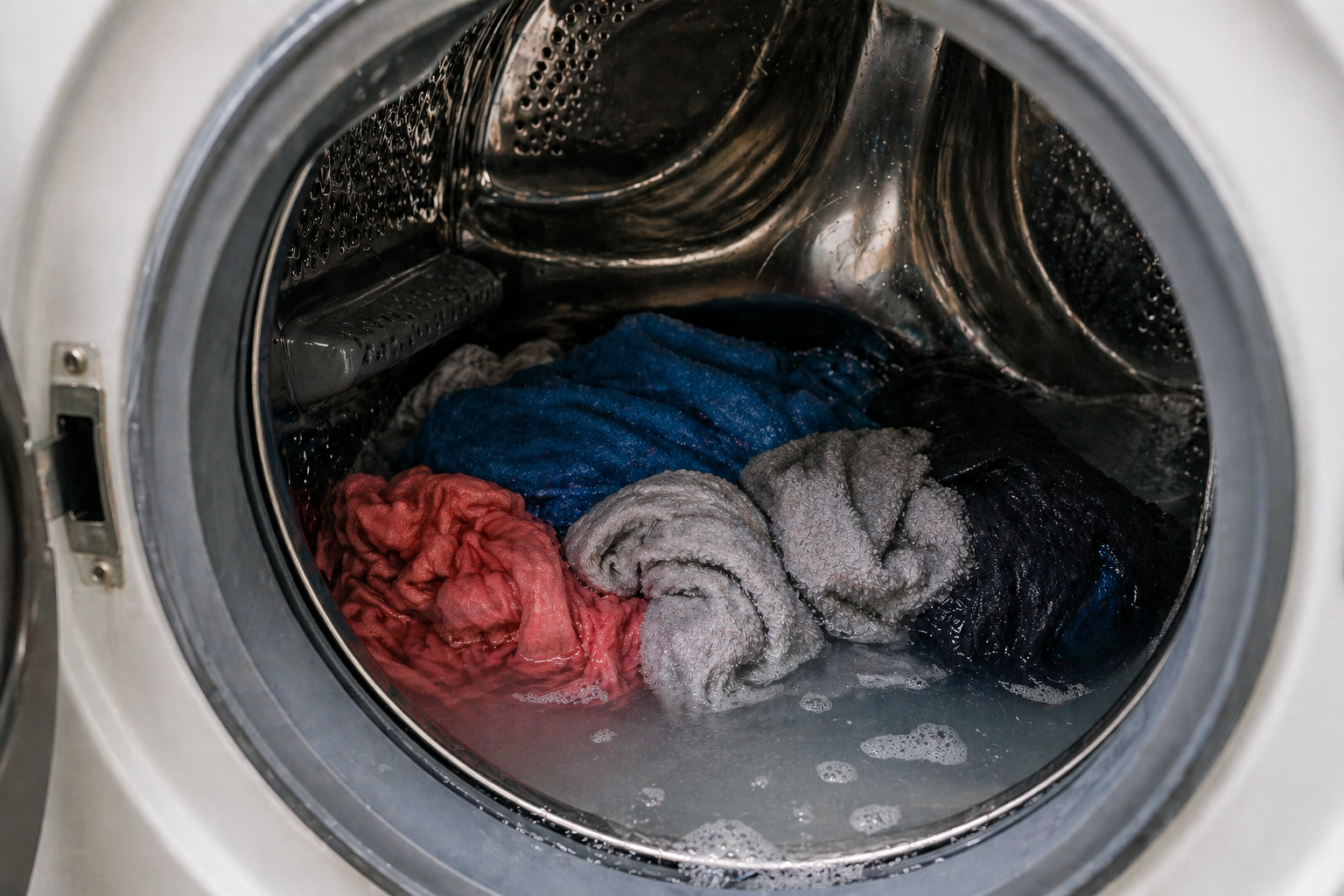
Washing Machine Not SpinningWhen a washing machine refuses to spin, the problem is often simpler than it looks. The vast majority of spin failures are caused by an unbalanced or overloaded load that trips the machine’s safety sensors. Modern washers monitor drum vibration and will refuse to spin if the weight is uneven. Redistributing the clothes and restarting the spin cycle solves many cases.
Another common culprit is the lid or door switch. Top‑load machines have a small plastic switch that tells the control board the lid is closed. If the switch is broken or misaligned, the washer won’t start its high‑speed spin. Front‑load machines use a door latch that serves the same safety purpose. Less frequently, a clogged drain pump or kinked hose prevents the tub from emptying; if water remains in the tub, the spin cycle is blocked to protect the motor. Finally, mechanical failures such as a worn drive belt, broken motor coupler, or faulty control board stop the drum even though the motor hums. These problems generally require professional service.


 Check Availability
 Check Availability